


For decades, the Mazda MX-5 Miata has occupied a unique, almost sacred space in the automotive landscape. It is the perennial benchmark for the "pure" driving experience—a no-frills, lightweight, rear-wheel-drive machine that prioritizes the connection between man and machine over raw horsepower or digital gadgetry. Yet, as the 2026 model year rolls out, the Miata finds itself at a crossroads. While the base car remains a triumph of simplicity, the upper echelons of the trim hierarchy—specifically the Retractable Fastback (RF) Club—invite a complex conversation about value, luxury, and the nature of the enthusiast sports car.
The Core Fundamentals: A Legacy of Value
At its heart, the Miata has never been about opulence. It was designed to be the modern interpretation of the classic British roadster, sans the catastrophic unreliability. The 2026 MX-5 Sport, starting at $32,045 (inclusive of the $1,315 destination fee), remains one of the few vehicles on the market that offers a legitimate, world-class sports car experience for the price of a mid-range compact sedan.
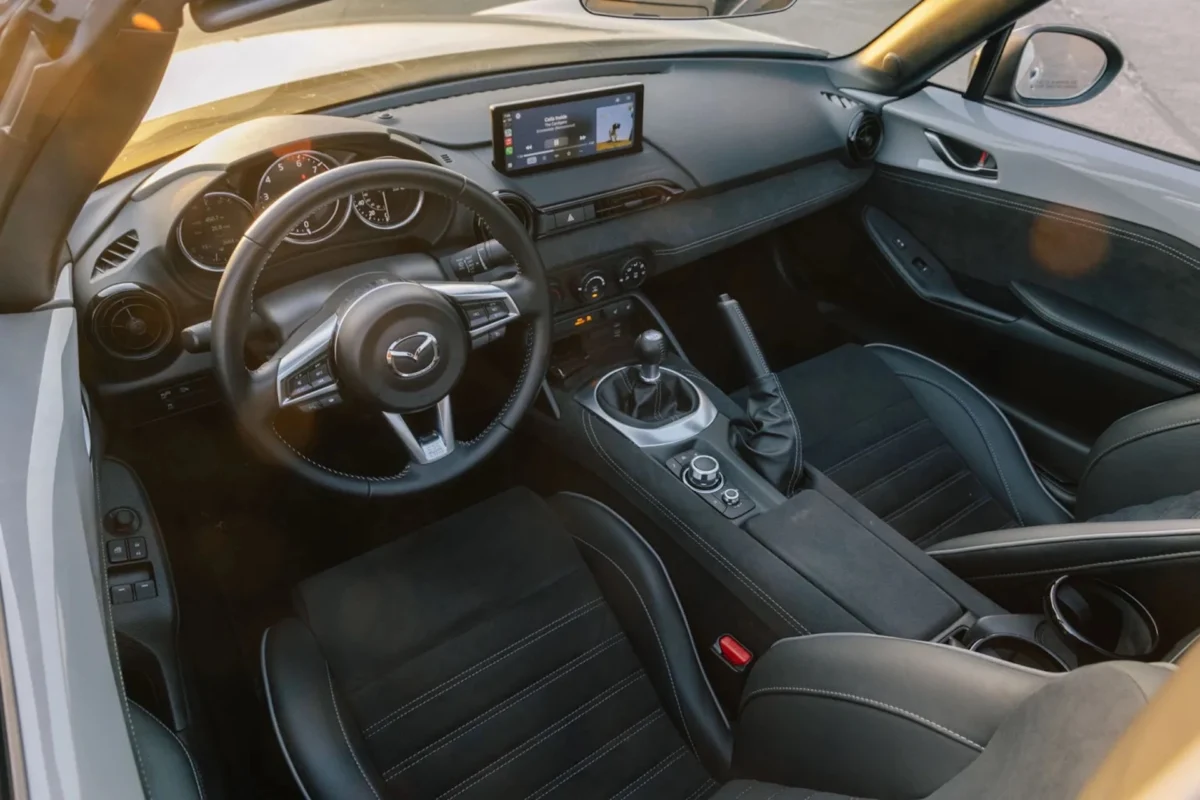
This entry-level model is the "purist’s" choice. It lacks the heavy power-retractable hardtop, the aggressive braking systems, and the bespoke interior trimmings found in the higher trims. Instead, it offers a manual gearbox, a naturally aspirated four-cylinder engine, and a chassis so well-balanced that it makes cars twice its price feel sluggish and disconnected.
Chronology of an Evolution: From Roadster to RF
The trajectory of the MX-5’s evolution has been one of gradual refinement rather than radical departure. When the current "ND" generation launched, it stayed true to the minimalist ethos. However, the subsequent introduction of the RF (Retractable Fastback) marked a significant shift in Mazda’s strategy.
Historically, the soft-top was the default choice for the enthusiast. The RF, introduced to broaden the Miata’s appeal, brought a sense of grand touring sophistication to the platform. By 2026, the lineup has crystallized into a tiered menu. Buyers are no longer just choosing a color; they are choosing a philosophy:
- The Sport (Entry): The "blank canvas" for tuners and budget-conscious drivers.
- The Club (Enthusiast): Adding the critical Limited Slip Differential (LSD), Bilstein dampers, and improved audio.
- The Grand Touring (Comfort): Focused on daily-driver utility with leather and tech.
- The RF Club (The Halo): A synthesis of high-end track hardware and complex engineering.
Decoding the Financial Spreadsheet
The question of whether the 2026 MX-5 RF Club is "worth it" is a math problem that requires careful parsing of Mazda’s pricing structure. With a starting MSRP of $44,110, the RF Club commands an $8,000 premium over the standard soft-top Club model. To the uninitiated, paying an additional $8,000 for a roof mechanism seems egregious. However, the optics of the price gap are deceptive.
The Hidden Value of the Brembo/BBS Package
A significant portion of that $8,000 "RF tax" is mitigated by the inclusion of the Brembo/BBS package as standard equipment on the RF Club. On the standard soft-top variants, adding the Brembo brakes, BBS forged wheels, and aero-kit enhancements costs an additional $5,050.
When you subtract the value of these performance components, the "true" cost of the retractable hardtop mechanism is closer to $3,000. For many, that is a reasonable price for a car that, when the top is up, looks like a bespoke Italian coupe, and when the top is down, transforms with a theatrical, "Iron Man-esque" sequence. The engineering behind the RF is a feat of packaging, allowing the vehicle to retain the Miata’s iconic silhouette while providing the security and noise isolation of a hardtop.
Supporting Data: The Weight vs. Capability Trade-off
Critics of the RF often point to the "weight penalty." The retractable mechanism adds approximately 100 pounds to the car’s curb weight. In the world of competitive racing, 100 pounds is an eternity; in the world of canyon carving and daily commuting, it is a variable that most drivers will barely perceive.
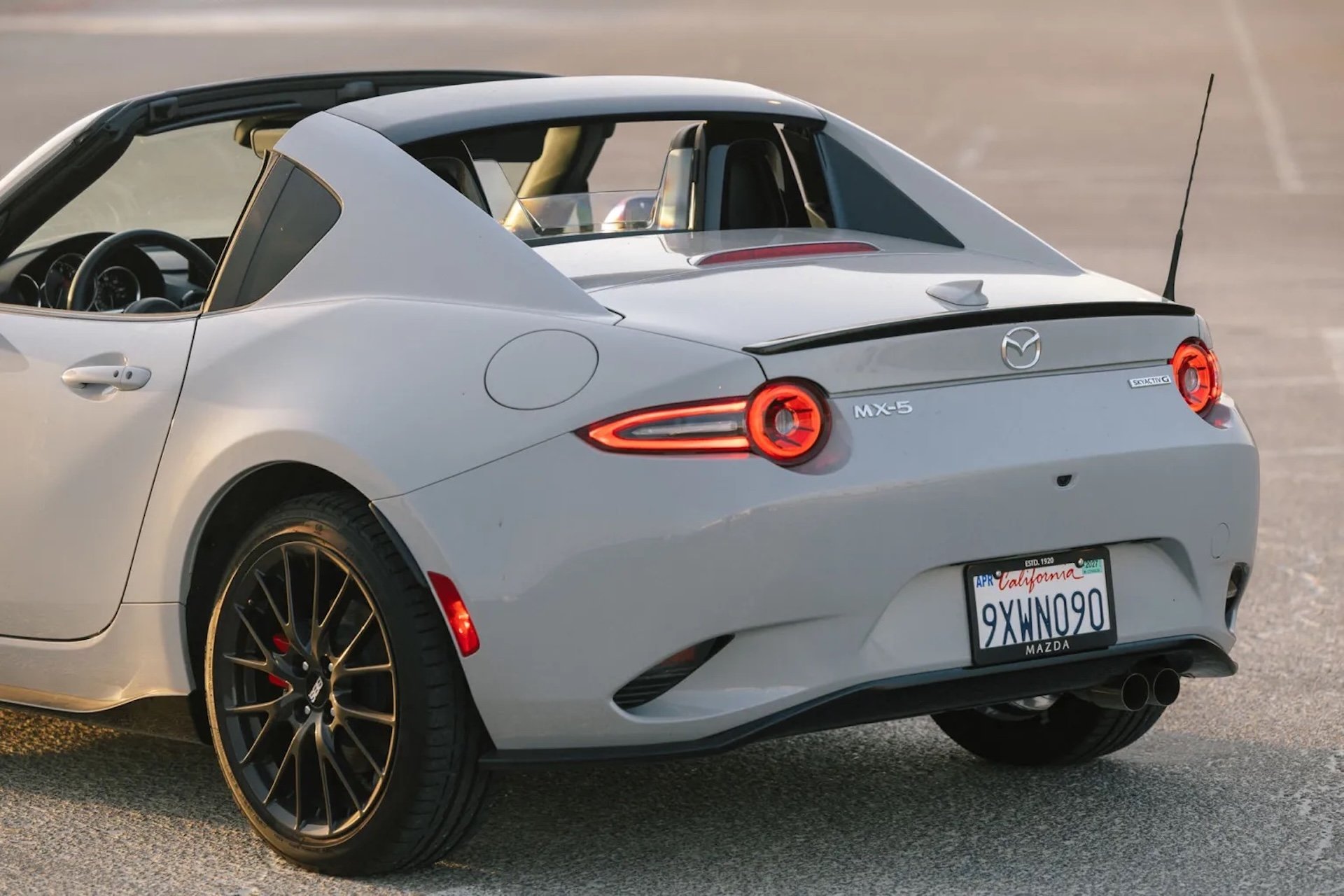
The suspension geometry, specifically the inclusion of Bilstein dampers on the Club trims, ensures that the extra weight is managed with poise. The chassis remains rigid, and the steering—often cited as the best in the industry—retains its telepathic precision. The data suggests that for 99% of owners, the trade-off in weight is a non-factor compared to the benefit of all-weather usability and improved structural aesthetics.
Official Stance and Market Positioning
Mazda has remained characteristically coy about the future of the internal combustion Miata, but their commitment to the 2026 lineup indicates a brand doubling down on its identity. By offering such a wide range of configurations, Mazda is effectively insulating the Miata from the "one-size-fits-all" trap.
In internal discussions, Mazda representatives often emphasize that the Miata is not a "one-car-fits-all" product, but a "one-car-for-every-need" product. The Sport is for the track day junkie; the Grand Touring is for the enthusiast who wants to drive to the office in comfort; the RF Club is for the individual who demands a premium aesthetic without sacrificing the fundamental Miata spirit.
Implications for the Future of Enthusiast Cars
The existence of the 2026 MX-5 is an anomaly in an industry obsessed with electrification and autonomous driving. The implication of its pricing strategy is clear: the market for high-engagement, mechanical vehicles is willing to pay a premium for specific configurations.
As we move toward a future where "driving" is increasingly a secondary task performed by software, the Miata represents a final, defiant stand. Whether you opt for the $32,000 base model or the $44,000+ RF Club, you are buying into a dying breed of automotive engineering.
The Verdict: How to Choose
If you are currently looking at the spreadsheet and struggling with the decision, the solution is simpler than the numbers suggest. Ask yourself the "roof question": Do you crave the tactile, raw experience of a folding fabric top that lets you smell the road, or do you desire a sleek, quiet, and sophisticated coupe that can disappear into a convertible at the push of a button?
If you prioritize lap times, the soft-top Club is your undisputed champion. It is lighter, cheaper, and more "honest." If, however, you view your car as a piece of functional art that needs to handle both a weekend blast on a winding mountain road and a rainy commute to work with equal grace, the RF Club is the ultimate iteration of the MX-5.
Ultimately, the Miata remains the answer to the question, "What is a sports car?" It is a vehicle that treats the driver as a participant, not a passenger. Whether that experience costs $32,000 or $45,000, the joy of driving a well-balanced, rear-wheel-drive machine remains the most valuable commodity on the road. The spreadsheet may be complex, but the driving experience remains beautifully, blissfully simple.
