





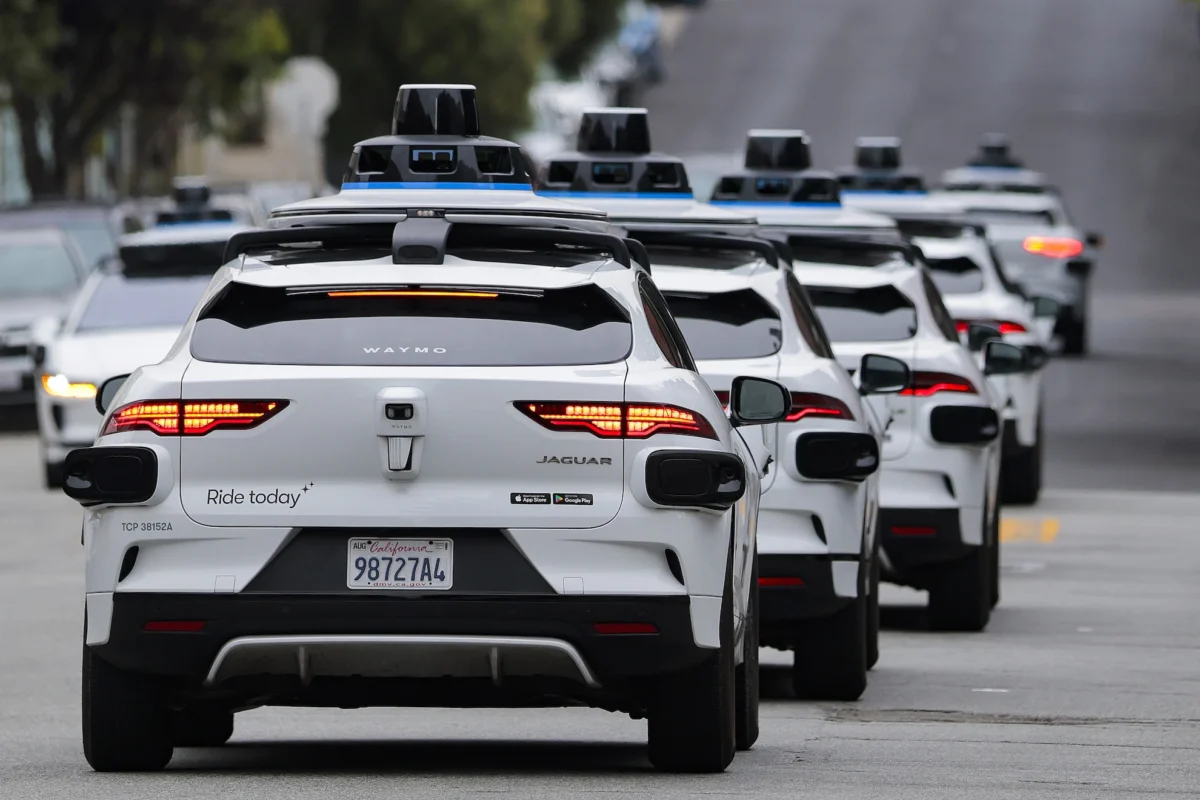
Alphabet Inc.’s autonomous vehicle subsidiary, Waymo, has officially announced plans to launch its flagship robotaxi service in Munich, Germany. The move represents a critical milestone in the company’s international expansion strategy, marking its first major foray into continental Europe. The announcement comes several months after the company quietly established a legal corporate entity within Germany, signaling long-term commercial ambitions in one of the world’s most sophisticated automotive markets.
While Waymo has established a dominant footprint in several major metropolitan areas across the United States—including San Francisco, Phoenix, Los Angeles, and Austin—the transition to European streets presents a distinct set of regulatory, technical, and cultural challenges. The company must navigate complex municipal mapping, rigorous safety testing, and multi-tiered regulatory approvals before members of the public can hail a driverless ride.
Main Facts: The Munich Rollout and the Step-by-Step Playbook
Waymo’s entry into the Bavarian capital will not happen overnight. Instead, the company is deploying the same highly structured, phased rollout playbook it has refined across more than a dozen cities in the United States.
[Phase 1: Manual Mapping] ──> [Phase 2: Safety Drivers] ──> [Phase 3: Restricted Passenger Testing] ──> [Phase 4: Commercial Launch]Phase 1: High-Definition Mapping
The initial phase involves deploying human-driven Waymo vehicles equipped with specialized sensor suites—including LiDAR, radar, and high-resolution cameras—to map the streets of Munich. These vehicles will construct highly detailed, three-dimensional digital maps of the city’s complex urban geography, capturing lane boundaries, traffic signals, crosswalks, signage, and physical obstructions.
Phase 2: Testing with Safety Drivers
Once the high-definition mapping phase is complete, Waymo will transition to autonomous testing. During this stage, the vehicles will drive themselves, but a trained human safety driver will remain behind the wheel at all times to monitor the system and intervene if necessary.
Phase 3: Restricted Passenger Testing
Following successful safety-driver testing, Waymo will remove the human operator. At this juncture, the driverless vehicles will begin carrying select passengers. In keeping with past deployments, this group will initially be restricted to Waymo employees, local media, and invited guests, allowing the company to gather real-world user feedback and validate passenger-facing software.
Phase 4: Full Commercial Launch
The final phase is a commercial ride-hailing service open to the general public. Waymo has indicated that it expects to reach this milestone toward the end of 2027. Once fully operational, users will be able to summon a driverless Waymo vehicle via a smartphone app, mirroring the commercial services currently available in U.S. cities.
Chronology: The Road to Germany’s Autonomous Era
The groundwork for Waymo’s entry into Germany was laid years ago through landmark legislative efforts, followed by strategic corporate positioning. Below is the timeline of events that paved the way for this expansion:
- May 2021: Germany’s parliament (Bundestag) passes pioneering legislation legalizing Level 4 autonomous driving on public roads. This historic move positions Germany as the first country in the European Union—and one of the first globally—to establish a comprehensive national legal framework for driverless operations.
- Early 2024: Waymo establishes a formal corporate entity in Germany, setting up a localized base of operations to handle logistics, government relations, and engineering requirements.
- August 2026: Waymo officially announces its Munich expansion plans in a public blog post, revealing ongoing discussions with German regulatory bodies and setting a target commercial launch date for late 2027.
- 2026 (Projected): Waymo plans to launch its first European commercial service in London, United Kingdom, serving as a critical operational precursor to its continental European debut in Munich.
- Late 2027 (Projected): Waymo’s commercial robotaxi service is scheduled to open to the general public in Munich, pending final regulatory clearances.
Supporting Data: The Battle for Level 4 Dominance
Germany’s early adoption of autonomous vehicle legislation has transformed the country into a premier testing ground for self-driving technology. However, the regulatory landscape is highly stratified, governed by the Society of Automotive Engineers (SAE) automation levels.
| Autonomy Level | Definition | Human Intervention | Key Players in Germany |
|---|---|---|---|
| Level 3 (Conditional) | System handles driving under specific conditions; driver must be ready to intervene. | Required upon system request | Wayve, Autobrains, Mercedes-Benz |
| Level 4 (High Autonomy) | System handles all driving within a defined geographic area; no human backup required. | Not required within operational design domain | Mobileye, Volkswagen, Waymo (pending permits) |
According to the latest data from Germany’s Federal Motor Transport Authority (Kraftfahrt-Bundesamt or KBA), the vast majority of autonomous testing permits currently held by technology firms and automakers are for Level 3 systems. Companies like the UK-based startup Wayve and Israel’s Autobrains have established a strong presence in this space.
In contrast, Level 4 permits—which allow for true driverless operations—are far more exclusive. Currently, only a select group of companies, including Intel’s Mobileye and Germany’s own Volkswagen Group, hold active permits to test Level 4 vehicles on public roads. Despite its global prominence, Waymo does not currently hold any testing or commercial permits in Germany. Securing these permits from the KBA is the primary regulatory hurdle the company must overcome before its mapping vehicles can transition to autonomous operations.
The Transatlantic and Cross-Channel Competitive Landscape
The race to deploy robotaxis is not confined to Germany. The United Kingdom, particularly London, has emerged as another high-stakes battleground for autonomous vehicle developers. The competitive dynamics in these markets are rapidly intensifying:
- London (2026): Waymo has targeted 2026 for its commercial debut in the UK capital. Here, it will face direct competition from Wayve, which has secured massive backing from SoftBank, Nvidia, and Microsoft, and is partnering with Uber to integrate its technology into the ride-hailing giant’s platform.
- The Chinese Presence: Baidu, China’s leading autonomous driving developer, has also initiated autonomous vehicle testing in London through collaborative partnerships with ride-hailing platforms Lyft and Freenow, setting up a three-way geopolitical showdown between American, European, and Chinese AV technology.
Official Responses: Navigating German Bureaucracy
To successfully launch in Munich, Waymo is adopting a highly collaborative approach with local and federal authorities, recognizing the stringent safety and administrative standards characteristic of German governance.
In an official blog post, Waymo emphasized its commitment to working hand-in-hand with German regulators:
"We are actively collaborating with Germany’s Federal Motor Transport Authority (KBA), Bavarian state authorities, and Munich municipal officials to ensure our deployment meets the highest safety standards and integrates seamlessly into the city’s existing transit ecosystem."
The regulatory approval process in Germany is notoriously rigorous. The KBA oversees vehicle type approvals and national safety standards, while local Bavarian and Munich authorities manage municipal road usage permits, public transit integration, and localized traffic safety rules.
Furthermore, Waymo must comply with Germany’s strict data privacy laws, including the European Union’s General Data Protection Regulation (GDPR). The high-definition cameras and sensors used for mapping and real-time navigation collect vast amounts of visual data, requiring Waymo to implement robust data-anonymization protocols to protect the privacy of Munich pedestrians and motorists.
Implications: What Waymo’s Munich Move Means for the Industry
Waymo’s expansion into Munich is a watershed moment for the autonomous vehicle sector, carrying profound implications for legacy automakers, urban transportation, and global technology standards.
                  ┌──────────────────────────────┐
                  │   Waymo Enters Munich        │
                  └──────────────┬───────────────┘
                                 │
         ┌───────────────────────┼───────────────────────┐
         ▼                       ▼                       ▼
┌─────────────────┐     ┌─────────────────┐     ┌─────────────────┐
│ Threat to Local │     │ Complexity of   │     │ Regulatory      │
│ OEMs (BMW/VW)   │     │ European Roads  │     │ Harmonization   │
└─────────────────┘     └─────────────────┘     └─────────────────┘
1. A Direct Challenge to European Automotive Giants
Munich is the global headquarters of BMW and is located in the home state of Audi (headquartered in Ingolstadt, Bavaria), while Volkswagen operates out of nearby Lower Saxony. By choosing Munich as its continental launchpad, Waymo is taking the fight directly to the home turf of Europe’s premier automotive manufacturers.
For years, European original equipment manufacturers (OEMs) have invested billions of dollars in developing proprietary autonomous driving systems. Waymo’s entry accelerated the timeline, forcing local players to either speed up their Level 4 development or consider partnering with third-party tech providers to avoid losing market share in the emerging "Mobility-as-a-Service" (MaaS) economy.
2. Adapting to European Urban Complexity
American cities, where Waymo has perfected its driverless system, are largely characterized by wide, grid-based road layouts and suburban sprawl. Munich, by contrast, presents an entirely different operational environment.
The city features medieval layouts, narrow streets, cobblestone pavements, complex roundabouts, and highly integrated public transit infrastructure, including streetcars and trams that share the roadway with passenger cars. Furthermore, Munich has a dense population of cyclists and pedestrians, requiring Waymo’s artificial intelligence to interpret and predict behaviors that are far less common in car-centric U.S. cities like Phoenix or Los Angeles. Success in Munich will prove that Waymo’s "Waymo Driver" AI platform is truly adaptable to global urban environments.
3. Catalyzing EU-Wide Regulatory Harmonization
As the first EU member state with a dedicated Level 4 legal framework, Germany is a regulatory trendsetter. How Waymo navigates the KBA’s approval process will likely establish the blueprint for how other European nations structure their autonomous vehicle regulations. If Waymo can successfully secure commercial approval in Munich, it will drastically lower the regulatory barriers to entry in other EU countries, paving the way for a rapid pan-European expansion in the late 2020s.
4. The Evolving Ride-Hailing Ecosystem
Waymo’s European push highlights a shifting dynamic between autonomous vehicle developers and traditional ride-hailing networks. While Waymo operates its own proprietary app (Waymo One) in the U.S., its competitors in Europe are forming deep alliances with established platforms like Uber, Lyft, and Freenow.
To achieve the density required for a profitable commercial service in Munich, Waymo may eventually have to decide whether to remain a vertically integrated operator or open its autonomous fleet to third-party mobility platforms to maximize utilization rates and accelerate market penetration.
