





Main Facts
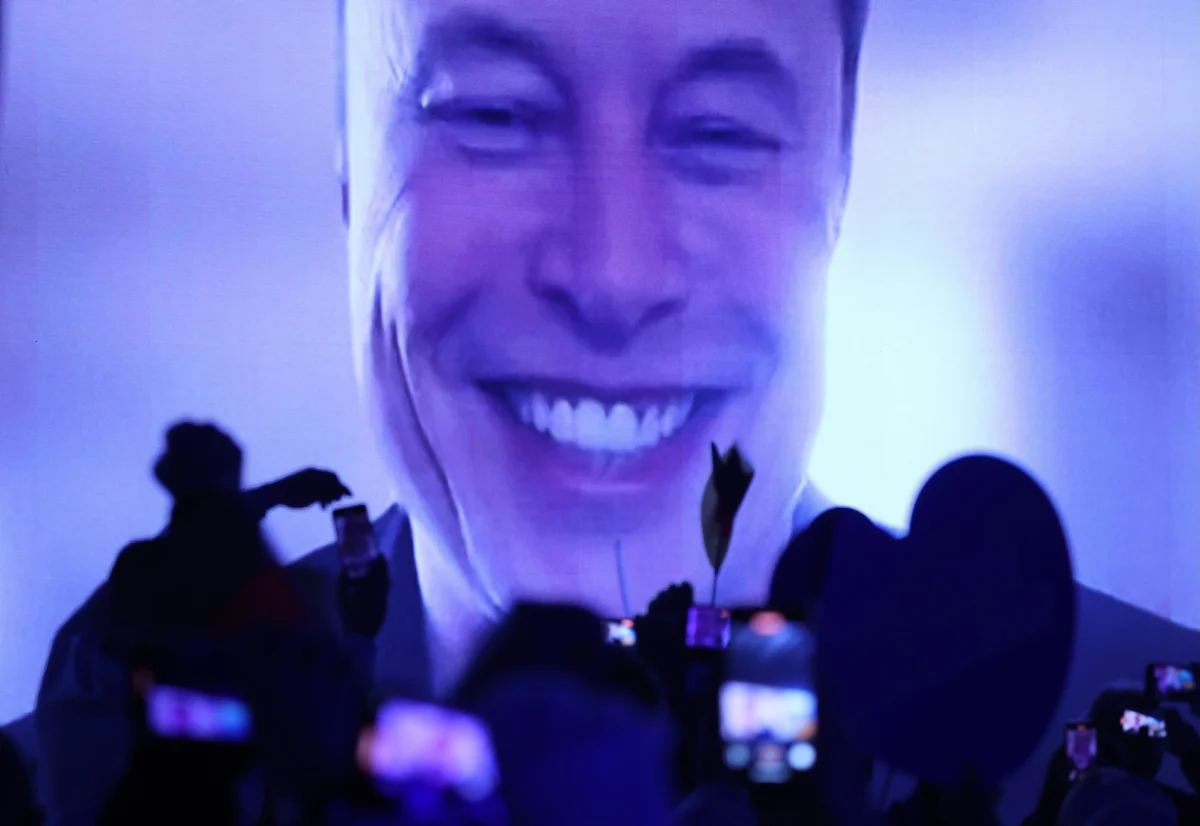
SpaceX’s transition from a highly guarded, privately held aerospace pioneer to a publicly traded corporation has brought its internal cultural friction into the public eye. On Tuesday, the company held its historic first-ever earnings call—an event that served as a microcosm of the delicate balance between Elon Musk’s boundless, futuristic optimism and the grounded, legally defensive pragmatism of his executive team.
The conference call highlighted the dual nature of modern SpaceX. The company is no longer just a rocket-launching service; it has evolved into a sprawling conglomerate encompassing global satellite telecommunications (Starlink), deep-space exploration systems, and a rapidly expanding cloud-computing and artificial intelligence (AI) infrastructure-leasing business.
During the call, Musk laid out several extraordinary claims regarding SpaceX’s future, projecting that the company’s Starlink satellite constellation would carry the majority of the world’s internet traffic within a decade. He also accelerated timelines for reaching $1 trillion in revenue and declared complex aerospace engineering challenges—such as Starship’s thermal protection systems—effectively "solved."
However, the call was equally defined by the systematic, polite damage control performed by Chief Operating Officer (COO) Gwynne Shotwell and Chief Financial Officer (CFO) Bret Johnsen. Throughout the presentation, both executives repeatedly intervened to reframe Musk’s expansive declarations into legally compliant, financially hedged, and risk-mitigated statements designed to satisfy the strict standards of public market disclosures.
Chronology of the Call: From Calibrated Projections to Unfiltered Ambition
The earnings call unfolded as a rhythmic back-and-forth between disciplined corporate reporting and unrestrained entrepreneurial forecasting.
[Call Segment]                    [Executive Action]                    [Key Theme / Subject]
------------------------------------------------------------------------------------------------------
Opening Remarks                   CFO Bret Johnsen                      Structured financial updates & AI compute
                                                                        ($100B ARR target by Dec)
------------------------------------------------------------------------------------------------------
20 Minutes Later                  CEO Elon Musk                         Bulldozes CFO's target: "$100B is a baseline,
                                                                        actual ARR will be higher"
------------------------------------------------------------------------------------------------------
Mid-Call (Starlink)               CEO Elon Musk                         Starlink to deliver "majority of world's
                                                                        internet" in < 10 years via V3 satellites
------------------------------------------------------------------------------------------------------
Minutes Later                     COO Gwynne Shotwell                   Softens Starlink claim: "Significant portion
                                                                        of global internet traffic"
------------------------------------------------------------------------------------------------------
Q&A (Starship & Artemis)          CEO Elon Musk                         Starship to fly humans by late next year;
                                                                        daily launches in 12 months
------------------------------------------------------------------------------------------------------
Immediate Follow-up               COO Gwynne Shotwell                   Re-anchors timeline to NASA milestones:
                                                                        "Boots on the moon in 2028"
The Financial Segment
The call began with CFO Bret Johnsen presenting a highly structured update on SpaceX’s emerging and lucrative business unit: renting out high-performance compute power to artificial intelligence companies. Johnsen detailed a carefully worded financial trajectory, highlighting a major revenue milestone expected by the end of the fiscal year.
Twenty minutes later, Musk addressed Johnsen’s presentation. Rather than endorsing the CFO’s cautious guidance, Musk dismissed the conservative framing, asserting that the stated targets were a absolute floor rather than an aspirational ceiling.
The Starlink Segment
The dialogue then shifted to Starlink and the upcoming deployment of SpaceX’s "V3" satellite hardware. Musk used the transition to make his first major macroeconomic projection of the day, stating that Starlink would soon dominate global internet traffic. Within minutes, Gwynne Shotwell stepped in to provide a more legally defensible version of the satellite constellation’s growth trajectory.
The Starship and Artemis Segment
The final portion of the call focused on Starship, SpaceX’s massive next-generation launch vehicle, and its role in NASA’s Artemis lunar program. In response to shareholder questions regarding crewed flights, Musk offered an aggressive timeline for both orbital human flights and launch frequencies. Shotwell immediately followed Musk’s remarks, re-anchoring the company’s official guidance to established NASA milestones and a more realistic multi-year development pathway.
Supporting Data: The Numbers Behind the Ambitions
To understand the tension between Musk and his executive suite, it is necessary to examine the specific financial and technical data points discussed during the call.
Compute Leasing and the Path to $100 Billion ARR
SpaceX has quietly leveraged its massive internal data center infrastructure—originally built to support Starlink’s global routing and autonomous rocketry calculations—to capitalize on the global AI boom. By renting out compute power to external AI firms, SpaceX has unlocked a highly profitable, high-margin revenue stream.
CFO Bret Johnsen provided concrete figures to illustrate this rapid growth:
- Short-Term Cloud Revenue: SpaceX contracted an additional $6.7 billion in cloud services revenue during the first few weeks of the third quarter alone. This revenue is scheduled to be realized over a six-month period starting in October.
- Capital Efficiency: Johnsen reported a less than one-year payback period on new capital deployments for compute infrastructure.
- Annualized Revenue Run Rate (ARR): Johnsen stated that this momentum, combined with contributions from newly integrated AI coding assistant Cursor, puts SpaceX on a trajectory to reach $100 billion in ARR by the end of December.
Musk, however, rejected the conditional nature of this projection:
"To be clear, the $100 billion ARR in December is not a question mark. That’s… that’s what we would achieve if we basically did nothing. So like, you know, I think it may be higher than that. It probably will be higher than that."
The Trillion-Dollar Timeline
Musk also revealed that SpaceX had internally updated its long-term top-line revenue goals, significantly accelerating the projections laid out in the company’s Initial Public Offering (IPO) filing documents from just two months prior:
- Original IPO Filing Projection: Reach $1 trillion in annual revenue by 2031.
- Revised Internal Projection: Reach $1 trillion in annual revenue by 2030.
- Optimistic Target: Musk added there is a "non-zero chance" of hitting this milestone by 2029.
    [2029 Target] ---- Non-Zero Chance (Musk's Optimistic Projection)
    [2030 Target] ---- Revised Internal Projection (Accelerated by 1 Year)
    [2031 Target] ---- Original IPO Filing Projection
Starlink V3 Capacity and Global Internet Share
The technological driver behind Starlink’s projected growth is the upcoming "V3" satellite generation. These satellites feature significantly upgraded bandwidth capacities and advanced laser cross-linking systems designed to reduce latency and bypass terrestrial routing bottlenecks.
Musk’s projection for this technology was expansive:
"It’s not out of the question that at some point, Starlink will deliver a majority of the world’s internet, at least in countries where we’re allowed to operate… It’s, you know, less than 10 years."
Starship Launch Frequency and Reusability
Addressing Starship’s development, Musk claimed the company would achieve a launch cadence of once per day, or "possibly more," by late next year. This projection relies on the assumption that SpaceX has resolved the complex thermal protection challenges associated with atmospheric re-entry.
Musk declared that he "consider[ed] the heat shield problem solved at this point," citing the successful intact splashdown of a Starship prototype in the Indian Ocean during its most recent test flight.
Official Responses and Executive Damage Control
The earnings call highlighted a recurring pattern: Musk delivers an expansive, unhedged prediction, and his executive team quickly follows with a carefully calibrated, legally compliant statement designed to protect the company from regulatory scrutiny.
Gwynne Shotwell on Starlink’s Market Share
Following Musk’s claim that Starlink would deliver "a majority of the world’s internet" in under a decade, COO Gwynne Shotwell reframed the projection:
"The significant amount of capacity we’re able to add to the Starlink constellation from the V3 satellites will enable us to continue providing even better service… In fact, in the years ahead, we expect Starlink will represent a significant portion of global internet traffic, which Elon also talked about."
By shifting the terminology from "a majority of the world’s internet" (which implies over 50% of global consumer and enterprise subscriptions) to "a significant portion of global internet traffic," Shotwell aligned the company’s messaging with defensible market-share growth projections.
Gwynne Shotwell on the Artemis Moon Landing
When Musk suggested that Starship would be ready to transport humans by the end of next year, Shotwell intervened to align expectations with NASA’s official timelines:
"We want to put boots on the ground, boots on the moon, in 2028."
This adjustment acknowledged the regulatory, safety, and testing milestones mandated by NASA’s Human Landing System (HLS) contract, tempering expectations of an immediate crewed flight.
+------------------------------------+---------------------------------------+
| Musk's Initial Assertion           | Executive Reframing / Clarification   |
+------------------------------------+---------------------------------------+
| Starlink will deliver "a majority  | Starlink will represent "a            |
| of the world's internet" in        | significant portion of global         |
| less than 10 years.                | internet traffic" in the years ahead. |
+------------------------------------+---------------------------------------+
| The $100 billion ARR by December   | We believe our current trajectory     |
| is "not a question mark" and       | puts us on a path to reach $100       |
| "probably will be higher."         | billion ARR by the end of this year.  |
+------------------------------------+---------------------------------------+
| Starship will fly humans by the    | SpaceX remains focused on NASA        |
| end of next year.                  | milestones, aiming to "put boots on   |
|                                    | the moon in 2028."                    |
+------------------------------------+---------------------------------------+
Implications: Public Accountability and the "Texas Shield"
Now that SpaceX is a publicly traded entity, the divergence between Musk’s rhetoric and his executives’ tempered projections carries significant legal and financial weight.
The Shift to Public Scrutiny
As a private entity, SpaceX could operate with a high degree of informational opacity. Under that structure, Musk’s ambitious timelines—such as his 2016 declaration that SpaceX would land humans on Mars by 2022—carried little risk of legal repercussions.
As a public company, however, SpaceX is subject to the Securities Exchange Act of 1934 and SEC Rule 10b-5, which prohibits corporate officers from making materially misleading statements or omitting material facts in connection with the purchase or sale of securities. While forward-looking statements are generally protected by safe harbor provisions under the Private Securities Litigation Reform Act (PSLRA), this protection requires that such statements are accompanied by "meaningful cautionary statements identifying important factors that could cause actual results to differ materially."
When Musk bypasses these disclosures to present projections as absolute certainty (e.g., stating a target is "not a question mark"), he increases the company’s potential exposure to regulatory scrutiny.
The Regulatory Landscape
Despite these risks, the current regulatory environment may limit the likelihood of federal enforcement. Data from recent legal reviews indicates that both the Securities and Exchange Commission (SEC) and the Department of Justice (DOJ) have reduced corporate prosecution rates and enforcement actions against major public companies. This shift provides public corporations with more breathing room regarding forward-looking statements than they enjoyed in previous decades.
The Texas Legal Shield
If federal regulators remain on the sidelines, SpaceX has also insulated itself from potential shareholder class-action lawsuits. Following disputes with Delaware’s corporate court system, Musk legally reincorporated SpaceX in Texas.
Texas has recently established specialized business courts designed to resolve complex commercial disputes. Legal experts note that Texas corporate law offers strong protections for corporate boards and executives under the business judgment rule. By shifting its legal home to Texas, SpaceX has created a robust defense against shareholder derivative lawsuits, making it much more difficult for investors to sue the company if Musk’s ambitious timelines and financial projections ultimately fall short.
Ultimately, SpaceX’s debut earnings call demonstrated that while the company’s legal and financial structures have adapted to the public markets, its leadership dynamic remains unchanged. Whether public investors will accept the tension between Musk’s grand visions and his executives’ grounded reality remains to be seen.
