


BENGALURU, INDIA — River, the Bengaluru-based electric vehicle (EV) startup, has secured $120 million in a Series C funding round to scale its manufacturing capabilities and accelerate its retail expansion. The capital infusion marks a pivotal milestone for the four-year-old startup as it transitions from product validation to high-volume commercial production in one of the world’s most competitive electric two-wheeler markets.
The funding round, which brings River’s total capital raised to date to $144 million, reflects a maturing Indian EV ecosystem where investors are increasingly prioritizing manufacturing execution, unit economics, and operational scalability over early-stage product concepts.
I. Main Facts: The Structure of the Series C Round
The Series C round was co-led by prominent Indian investment firms Elev8 Venture Partners and Claypond Capital. It also saw significant participation from a cohort of domestic institutional investors and asset management companies, including:
- Singularity AMC
- Anicut Capital
- 360 ONE Asset
- JIF Capital
- HDFC AMC
Crucially, the round also secured continued participation from River’s high-profile existing backers, including Japanese automotive giant Yamaha Motor, the Dubai-based conglomerate Al-Futtaim Group, and Japanese trading house Mitsui.
According to River’s co-founder and Chief Executive Officer, Aravind Mani, the capital structure of this round is highly favorable for the company’s long-term equity health. Between 10% and 12% of the $120 million round was structured as venture debt, with the remainder raised as equity. Furthermore, the equity portion consisted entirely of primary capital injected directly into the company’s balance sheet to fund growth, with no secondary share sales or partial exits by early investors or founders.
River Funding History & Structure (Series C)
┌─────────────────────────────────────────────────────────┐
│ Total Series C Raised: $120 Million                     │
├─────────────────────────────────────────────────────────┤
│ ── Primary Equity Capital: ~88% - 90%                   │
│ ── Venture Debt: ~10% - 12%                             │
│ ── Secondary Share Sales: 0%                            │
├─────────────────────────────────────────────────────────┤
│ Total Cumulative Capital Raised to Date: $144 Million   │
└─────────────────────────────────────────────────────────┘
The fresh capital is earmarked for three primary initiatives:
- Expanding manufacturing capacity through the construction of a second, high-capacity production facility.
- Growing the company’s retail footprint across tier-1 and tier-2 Indian cities.
- Funding the research and development of two new vehicle models slated for release in the coming years.
II. Chronology: River’s Trajectory (2021–Present)
2021: Founding and the Utility Thesis
River was founded in 2021 by Aravind Mani and Vipin George at a time when India’s electric two-wheeler market was starting to experience exponential growth. While early market leaders like Ola Electric and Ather Energy focused on high-speed, tech-heavy premium scooters targeted at urban tech enthusiasts, River identified an underserved niche: utilitarian, robust, and highly practical multi-purpose two-wheelers.
2023: Launching the "Indie"
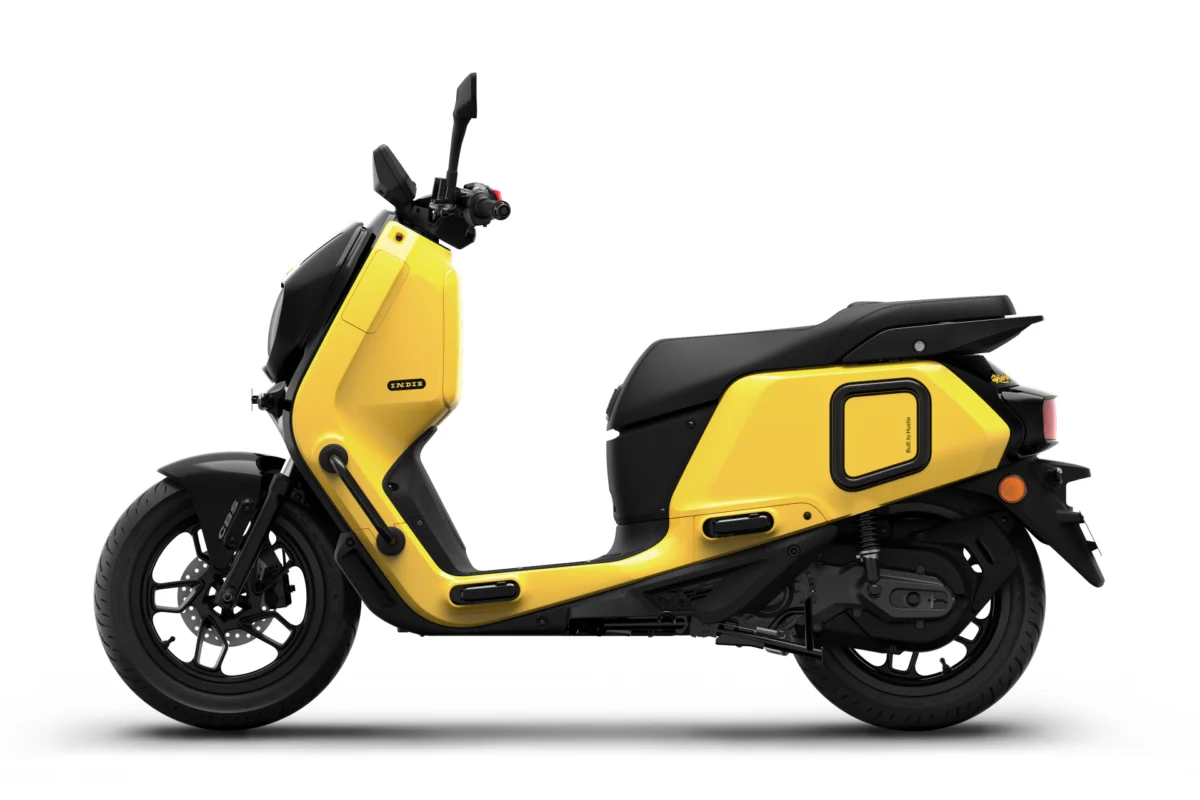
In 2023, River launched its flagship and, to date, only model: the River Indie. Dubbed the "SUV of scooters," the Indie was designed specifically for utility. Featuring a rugged chassis, expansive storage spaces, pannier mounts, and a focus on durability, the vehicle targeted self-employed individuals, small business owners, and gig workers who required a reliable workhorse rather than a lifestyle accessory.
2024–2025: Navigating the "Production Hell"
After launching the Indie, River entered the challenging phase of hardware scaling. Over the course of late 2024 and 2025, the startup focused heavily on refining its assembly processes, securing its supply chain, and training its workforce. Production scaled gradually from a modest 20 vehicles per day to 300 vehicles per day by early 2026.
2026: Financial Inflection and Series C
By March 2026, River reported a 330% year-over-year revenue increase for the fiscal year. This performance, alongside reaching a monthly revenue run rate of approximately ₹1 billion ($11 million), set the stage for the $120 million Series C round closed in mid-2026.
River's Growth Timeline
[2021] ── Company founded by Aravind Mani & Vipin George
  │
[2023] ── Launch of the flagship "Indie" utility scooter
  │
[2024-2025] ── Scaling production from 20 to 300 units per day
  │
[2026] ── Revenue grows 330% YoY; Closes $120M Series C round
  │
[2027] (Proj.) ── Commissioning of new mega-factory; Target: 200 stores
  │
[2028-2029] (Proj.) ── Target operational profitability (20k-25k units/month)
III. Supporting Data: Financials, Production, and Specifications
River’s growth trajectory is backed by robust operating metrics that differentiate it from typical pre-revenue hardware startups.
Vehicle Specifications and Market Positioning
The River Indie is priced at ₹155,000 ($1,630). It is positioned in the mid-to-high segment of the Indian electric two-wheeler market, balancing cost against utility features.
| Feature / Metric | Specification |
|---|---|
| Retail Price | ₹155,000 (~$1,630 USD) |
| Claimed Range | ~99 miles (~159 kilometers) per charge |
| Primary Target Audience | Self-employed professionals aged 28 to 35 |
| Key Design Attributes | Expanded storage, accessory mounts, rugged suspension |
Financial Performance and Unit Economics
- Annual Revenue Growth: 330% increase for the fiscal year ended March 2026.
- Monthly Revenue Run Rate: Approximately ₹1 billion (~$11 million USD).
- Gross Margins: Currently approaching double digits, with expectations of expansion as localized sourcing and manufacturing efficiencies scale.
- Profitability Threshold: River projects achieving operational profitability when monthly production and sales reach 20,000 to 25,000 vehicles, a milestone targeted for the 2028–2029 fiscal years.
Manufacturing Capacity and Expansion Plans
River is currently operating near maximum capacity at its first assembly plant located on the outskirts of Bengaluru.
Manufacturing Capacity Expansion Roadmap
┌──────────────────────────────────────────────────────────┐
│ Current Bengaluru Plant (Fully utilized by early 2027)   │
│ ── Monthly Capacity: ~10,000 vehicles                    │
└───────────────────────────┬──────────────────────────────┘
                            │
                            ▼ (Construction starts Q4 2026)
┌──────────────────────────────────────────────────────────┐
│ New Manufacturing Facility (Phase 1 active mid-2027)     │
│ ── Projected Annual Capacity: 700,000 - 800,000 vehicles │
└──────────────────────────────────────────────────────────┘- Current Plant: Upgraded to produce 10,000 vehicles per month. It is expected to be fully utilized by early next year.
- New Plant: Construction is scheduled to begin within the next two months. Phase 1 is slated for commissioning by mid-2027, with an ultimate designed annual capacity of 700,000 to 800,000 vehicles.
- Retail Footprint: The startup currently operates through more than 75 physical stores across India, with cumulative sales exceeding 50,000 units. River plans to expand this network to 200 stores by March 2027 and to 400 stores by March 2028.
IV. Official Responses: Executive and Investor Perspectives
The leadership at River views this funding round not just as a financial victory, but as validation of their capital-efficient, execution-first business model.

Aravind Mani on the Realities of Hardware Scaling
Reflecting on the grueling process of scaling physical production, CEO Aravind Mani emphasized the steep operational learning curve associated with automotive manufacturing:
"There was a point in time when we were making 20 vehicles a day. Today we make 300 vehicles a day, and that scale-up has not been easy. This is the steepest learning curve for any company out there."
Mani also noted that the profile of investors participating in the Series C represents a fundamental shift in what the market expects from EV startups. While early rounds were raised on the promise of technology and design, this round was won on the factory floor:
"The new round marks a shift in what investors are backing. Earlier financings supported product development and technology. The new investors are betting on our ability to scale now that we have demonstrated clear market traction."
Critique of Foreign Venture Capital Perspectives
Mani offered a candid critique of how international venture capitalists, particularly those in Silicon Valley, have approached the Indian EV landscape. While global funds have been eager to invest in India’s macroeconomic growth, Mani argues they often fail to grasp the unique product requirements of local consumers:
"They understand macroeconomics. What they don’t understand is the customer behavior. Many Silicon Valley investors underestimated how local consumers would adopt electric two-wheelers, expecting them to mirror Western premium adoption curves rather than the utility-driven, cost-sensitive realities of the Indian commuter."
V. Implications: Navigating the Indian EV Landscape
River’s successful Series C and its aggressive scaling plans carry significant implications for the broader Indian electric vehicle ecosystem.
Indian E-2-Wheeler Market Competitive Landscape
┌──────────────────────────────────────────────────────────────────┐
│ Premium / Performance Segment                                    │
│ ── Ola Electric, Ather Energy                                    │
├──────────────────────────────────────────────────────────────────┤
│ Utility / Practicality Segment                                   │
│ ── River (Indie), Legacy Brands (TVS, Bajaj - select models)     │
├──────────────────────────────────────────────────────────────────┤
│ Legacy Incumbents (Expanding EV portfolios)                      │
│ ── Bajaj Auto (Chetak), TVS Motor (iQube)                        │
└──────────────────────────────────────────────────────────────────┘
The Supremacy of the Two-Wheeler Segment
In India, the transition to electric mobility is uniquely bottom-up. Unlike Western markets, where passenger cars lead electrification, India’s EV revolution is overwhelmingly driven by two- and three-wheelers. Low operating costs, government subsidies (such as the FAME and PLI schemes), and the rapid expansion of urban delivery networks have made electric scooters highly attractive. By carving out a distinct "utility" niche within this segment, River has managed to grow rapidly without entering a direct price war with performance-oriented brands.
The Single-Model Constraint vs. Portfolio Expansion
Thus far, River’s single-model strategy with the Indie has allowed it to remain lean, optimize its supply chain, and avoid the complexities of managing multiple production lines. However, Mani admits that this focus has now become a bottleneck:
"The restriction is the capacity. I don’t have capacity to do one more model today in my current factory."
By securing $120 million, River can finally break this bottleneck. The construction of the new mega-facility will allow the company to introduce two new models next year, expanding its addressable market and catering to different price points and use cases.
Intensifying Competition
As River scales toward its target of 400 stores and nearly a million units of annual capacity, it will increasingly collide with both agile startups and legacy automotive giants. Ola Electric and Ather Energy continue to build massive manufacturing ecosystems, while legacy giants like TVS Motor Company and Bajaj Auto are leveraging their massive, pre-existing dealer networks to claw back market share with their respective electric offerings.
River’s future success will depend on whether it can maintain its high double-digit growth and transition to operational profitability by 2028 without sacrificing the build quality and utility focus that made the Indie a breakout success. With a fortified balance sheet and strong backing from strategic global partners like Yamaha, River is well-positioned to transition from a promising hardware startup into a major player in India’s clean mobility future.
