





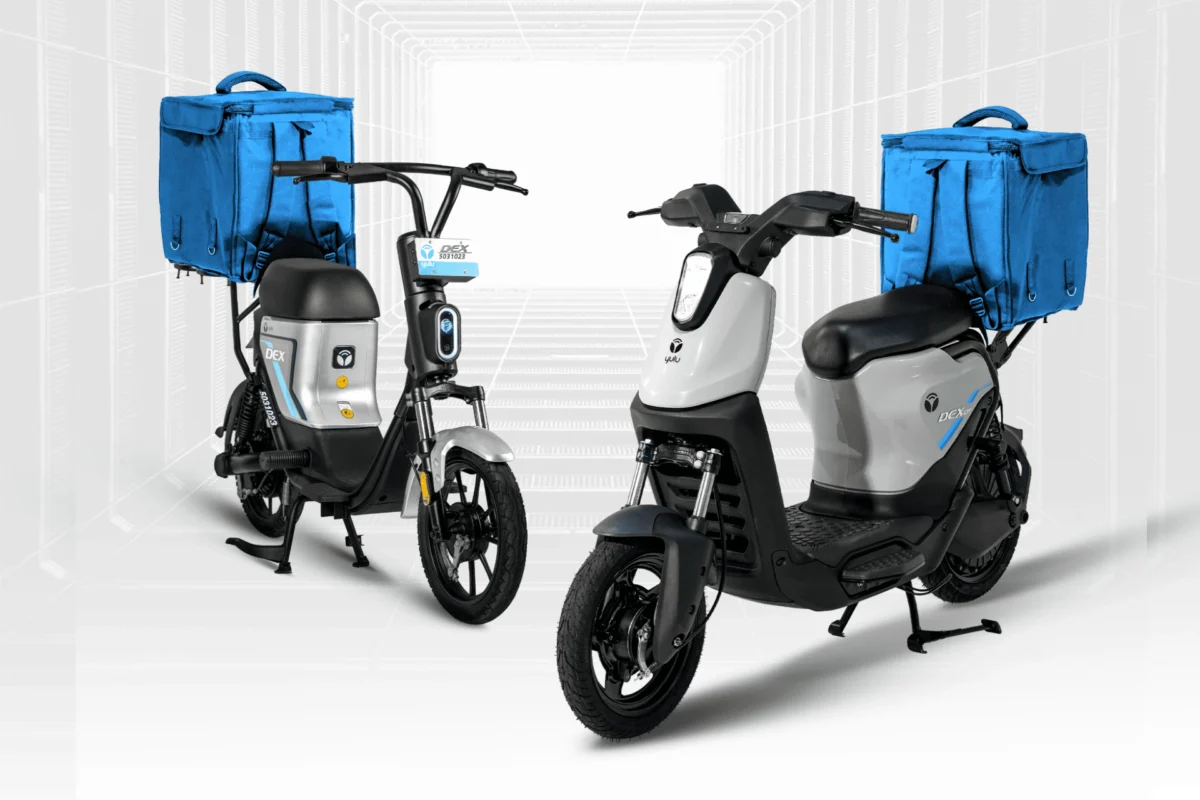
BENGALURU, India — As India’s rapid-delivery market undergoes an unprecedented expansion, electric mobility pioneer Yulu has capitalized on the surging demand by securing $93 million in a fresh round of funding. The Series C investment, consisting of a mix of equity and debt, is positioned to help the Bengaluru-based startup scale its fleet, launch higher-speed utility electric vehicles, and cement its position as the primary infrastructure provider for India’s booming gig economy.
With quick-commerce platforms racing to deliver groceries, household goods, and electronics to urban consumers within minutes, Yulu’s shared electric two-wheeler model has emerged as a vital enabler for delivery partners seeking affordable, hassle-free transportation.
1. Main Facts: The $93 Million Capital Injection
The funding round values Yulu at approximately $170 million post-money, according to sources familiar with the matter. Co-founder and Chief Executive Officer Amit Gupta did not dispute the valuation figure.
+-------------------------------------------------------------------+
|                     YULU SERIES C FUNDING AT A GLANCE             |
+------------------------------------+------------------------------+
| Total Capital Raised               | $93 Million                  |
+------------------------------------+------------------------------+
| Equity Component                   | $63 Million                  |
+------------------------------------+------------------------------+
| Debt Financing                     | $30 Million                  |
+------------------------------------+------------------------------+
| Lead Equity Investor               | GEF Capital Partners         |
+------------------------------------+------------------------------+
| Estimated Post-Money Valuation     | $170 Million                 |
+------------------------------------+------------------------------+
| Primary Objective                  | Expand fleet to 200,000 EVs  |
+------------------------------------+------------------------------+
Key Transaction Elements:
- Equity and Debt Split: The Series C round consists of $63 million in equity financing led by sustainability-focused private equity firm GEF Capital Partners, alongside $30 million in debt.
- Secondary Share Purchase: Approximately $5.5 million of the equity portion was allocated to buy out shares from early-stage seed investors whose funds were reaching the end of their typical investment lifecycles.
- Investor Realignment: Existing institutional backers, including Indian automotive giant Bajaj Auto and Canadian mobility technology firm Magna International, chose to waive their pre-emptive rights. This strategic decision allowed GEF Capital Partners to acquire its desired ownership stake.
- Path to IPO: According to CEO Amit Gupta, this Series C round is anticipated to be Yulu’s final equity-raising campaign before pursuing an initial public offering (IPO). Future vehicle acquisitions and geographical expansions are expected to be financed through debt and asset leasing structures.
2. Chronology: The Evolution of Yulu’s Business Model
Yulu’s journey reflects the broader evolution of urban mobility and e-commerce logistics in India over the past decade.
2017: The Commuter Share Beginnings
Yulu was founded in 2017 by Amit Gupta (co-founder of adtech unicorn InMobi), RK Misra, Hemant Gupta, and Naveen Dachuri. Initially, the company operated as a dockless, app-based bicycle-sharing platform targeting first- and last-mile connectivity for urban commuters in traffic-congested cities like Bengaluru and Pune. The early fleet relied on pedal bicycles to bridge the gap between metro stations and corporate offices.
2018–2019: Transition to Low-Speed Electric Two-Wheelers
Recognizing the physical limitations of pedal bicycles in India’s hot climate and hilly urban terrains, Yulu introduced "Yulu Miracle" in late 2018—a lightweight, low-speed electric scooter requiring no driver’s license or vehicle registration. This shift attracted a broader demographic of urban commuters and caught the attention of Bajaj Auto, which partnered with Yulu in 2019 to co-design and manufacture purpose-built electric two-wheelers.
2020–2021: The Pandemic Pivot and Gig Economy Boom
The onset of the COVID-19 pandemic in early 2020 decimated office commuting, threatening Yulu’s primary revenue stream. Concurrently, government-mandated lockdowns triggered an exponential rise in home delivery services for food, medicine, and groceries.
Yulu quickly pivoted its operational focus from consumer micro-mobility to commercial delivery logistics. The startup introduced weekly and monthly rental subscription models tailored specifically for delivery riders. This pivot allowed gig workers—many of whom had lost their primary sources of income—to enter the delivery workforce without the prohibitive upfront cost of purchasing a personal vehicle.
2022–Present: Institutional Scaling and the Quick-Commerce Era
By 2022, quick-commerce platforms like Blinkit, Zepto, Swiggy Instamart, and BigBasket BB Now began offering 10-to-20-minute deliveries. This rapid-fulfillment model demanded a massive influx of delivery riders operating in localized hubs.
Yulu became the infrastructure backbone for these platforms. By abandoning its consumer-facing retail sales plans and focusing entirely on a B2B2C subscription model, the company aligned its growth with India’s digital commerce expansion.
3. Supporting Data: Operational Metrics and Financial Trajectory
Yulu’s operational footprint has scaled alongside its funding rounds. The company’s current and projected metrics demonstrate the sheer volume of transactions supported by its network:
- Current Fleet Size: Approximately 50,000 active electric two-wheelers.
- Target Fleet Size (24 Months): 200,000 vehicles, driven by the introduction of new models.
- Weekly Mileage: The active fleet logs roughly 1.6 million zero-emission miles per week.
- Daily Deliveries: Yulu’s vehicles power more than 750,000 last-mile deliveries every day.
- Revenue Growth: The startup reported a seven-fold (700%) increase in revenue between fiscal year 2023 (FY23) and fiscal year 2026 (FY26).
- Profitability Milestones: Yulu achieved positive Earnings Before Interest, Taxes, Depreciation, and Amortization (EBITDA) in the last financial year. The company expects to achieve positive Earnings Before Interest and Taxes (EBIT)—operating profitability—by next year.
+-------------------------------------------------------------------+
|                    YULU OPERATIONAL FOOTPRINT                     |
+------------------------------------+------------------------------+
| Current Fleet                      | 50,000 EVs                   |
+------------------------------------+------------------------------+
| Projected Fleet (2026)             | 200,000 EVs                  |
+------------------------------------+------------------------------+
| Daily Deliveries Supported         | 750,000+                     |
+------------------------------------+------------------------------+
| Weekly Eco-Friendly Miles          | 1.6 Million                  |
+------------------------------------+------------------------------+
| Geographic Presence (Current)      | 12 Cities                    |
+------------------------------------+------------------------------+
| Geographic Target (Next 12 Months) | ~20 Cities                   |
+------------------------------------+------------------------------+
Geographical Reach
Yulu currently operates in 12 Indian cities. It manages its own operations in major metro markets, including Bengaluru, Mumbai, Hyderabad, and the Delhi-National Capital Region (NCR). In eight other urban markets, Yulu utilizes a franchise partner model to scale its footprint with lower capital expenditure. The company plans to expand to approximately 20 cities within the next 12 months, with Pune and Chennai identified as immediate expansion targets.
4. Official Responses: The "AWS of Mobility" Strategy
Yulu’s leadership views the startup not merely as an EV rental service, but as a foundational utility layer for the logistics sector.
In an interview, co-founder and CEO Amit Gupta compared Yulu’s role to that of Amazon Web Services (AWS) in the software industry:
"We view ourselves as the AWS of mobility. We supply the underlying infrastructure that lets delivery workers operate efficiently without any third-party logistics (3PL) providers taking a significant cut of their hard-earned wages."
Gupta clarified that while Yulu partners with virtually every major e-commerce, quick-commerce, and food-delivery platform in India—including global giants like Amazon and Walmart-owned Flipkart—its primary commercial relationship remains directly with the individual gig workers who rent the vehicles.
Diversifying the Product Line: The "Yulu Express"
To sustain its growth, Yulu is addressing a key limitation of its existing fleet: speed and payload capacity. The current fleet consists of low-speed electric vehicles capped at 25 km/h, which are highly efficient for short, localized deliveries but unsuitable for longer-distance routes or passenger transport.
To bridge this gap, Yulu is launching Yulu Express, a full-sized, higher-speed electric scooter designed for:
- Long-haul e-commerce deliveries.
- Bike taxi services (competing with platforms like Rapido and Uber Moto).
- Express parcel services.
Gupta revealed that approximately one-third of the projected 200,000-vehicle fleet will consist of this new high-speed model. While Yulu’s low-speed fleet continues to be manufactured by Bajaj Auto, the high-speed "Yulu Express" is being built by a different Indian original equipment manufacturer (OEM), though Gupta declined to name the partner. Currently, 500 units of the new model are undergoing active trials in Bengaluru, with pilot programs expanding to three additional cities.
5. Implications: Reshaping Gig Work, Quick Commerce, and Urban Air Quality
The capital injection into Yulu has broad implications for India’s urban economy, labor market, and environmental goals.
Redefining Gig Economy Economics
In India, the barrier to entry for delivery gig work has historically been ownership of a two-wheeler. Purchasing a petrol-powered motorcycle or an electric scooter requires substantial upfront capital or access to high-interest vehicle loans, which are often unavailable to low-income workers.
Yulu’s weekly rental subscription model democratizes access to these jobs. By removing the financial burden of vehicle ownership, maintenance, and insurance, Yulu lowers the barrier to entry for the gig economy. Additionally, because electric charging (via battery swapping) is significantly cheaper than petrol, delivery riders using Yulu can retain a larger percentage of their daily earnings.
Supporting the Decarbonization of Last-Mile Logistics
India’s metropolitan areas suffer from some of the highest air pollution levels globally. At the same time, the rapid rise of quick commerce threatens to flood urban streets with thousands of additional petrol-powered delivery vehicles.
By scaling its fleet to 200,000 electric vehicles, Yulu provides a clean, zero-emission alternative for high-frequency delivery runs. The company’s battery-swapping infrastructure—developed in partnership with Magna under the "Yuma Energy" brand—ensures that electric two-wheelers can remain on the road with minimal downtime, proving that green logistics can scale to meet commercial demands.
Fueling the Quick-Commerce Arms Race
The business models of quick-commerce startups depend heavily on delivery speed, rider retention, and cost control. As platforms like Zepto, Blinkit, and Swiggy Instamart compete for market share, access to a reliable, electrified delivery fleet is a major competitive advantage. Yulu’s expansion ensures that these platforms can scale their delivery workforces rapidly without facing vehicle shortages, helping to sustain the fast-growing quick-commerce sector in India’s tier-1 and tier-2 cities.
