

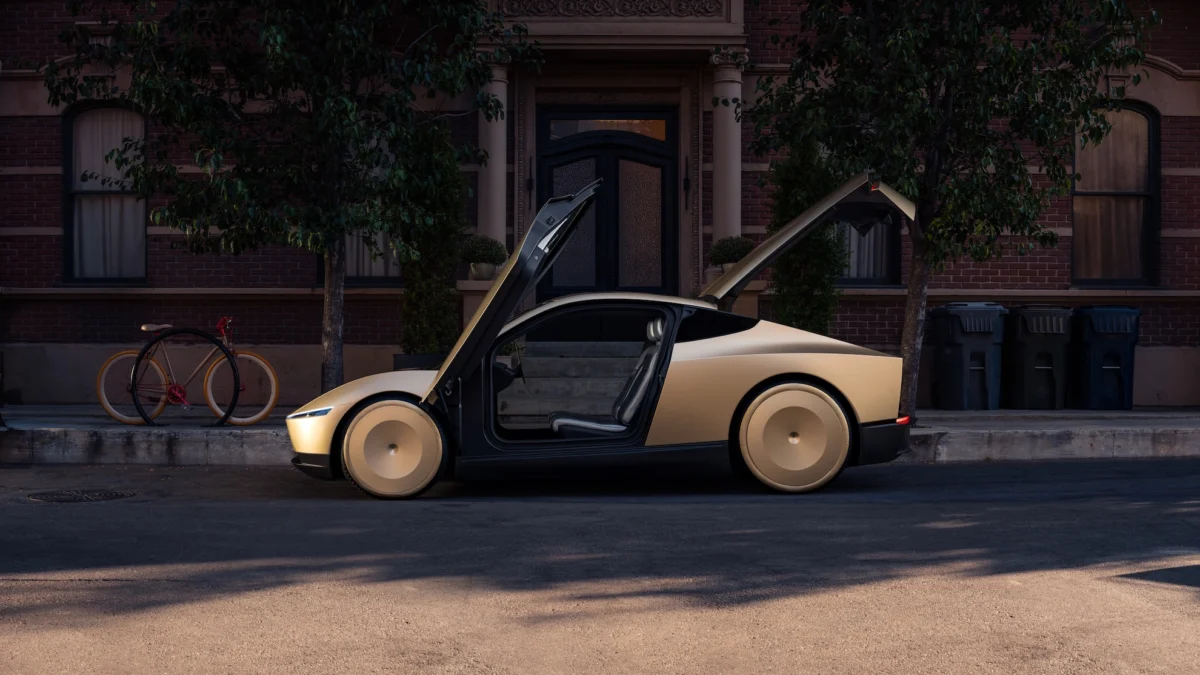
Ahead of its highly anticipated autonomous vehicle reveal in Austin, Texas, Tesla has quietly signaled a major shift in its go-to-market strategy for self-driving technology. On Thursday, the electric vehicle pioneer published an online "robotaxi interest form," inviting businesses to apply for Cybercab fleet purchases and express interest in developing the physical infrastructure required to support its upcoming autonomous ride-hailing network.
The release of the form marks a crucial departure from Tesla’s historical focus on a purely proprietary, in-house network or a peer-to-peer system composed entirely of individually owned customer vehicles. By opening the door to third-party fleet operators, mobility hubs, and infrastructure partners, Tesla is acknowledging the immense operational and capital barriers to scaling a global autonomous ride-hailing service alone.
1. Main Facts: The Cybercab Interest Form and Tesla’s B2B Outreach
The newly published "robotaxi interest form" is the clearest indication yet that Tesla’s ambitions for its gold-hued, purpose-built autonomous vehicle—the Cybercab—extend far beyond acting as a sole operator of a proprietary taxi service.
While the form is not definitive proof of finalized commercial contracts, it serves as an official registry for companies looking to integrate Tesla’s autonomous technology into their own business models. The questionnaire asks interested parties to categorize their interest into several distinct operational areas:
- Cybercab Fleet Purchasing: Allowing corporate entities to buy the purpose-built autonomous vehicles in bulk to operate their own localized transport services.
- Mobility Hubs and Infrastructure: Partnering with real estate, parking, and utility companies to establish the physical locations needed for cleaning, charging, and staging autonomous fleets.
- Event Collaboration: Integrating autonomous transport services into large-scale commercial events, venues, or municipal transit frameworks.
- Other Partnerships: A catch-all category for software integration, localized regulatory lobbying, and third-party logistics.
By actively soliciting interest from outside corporations, Tesla is laying the groundwork for a hybrid operating model. Under this framework, Tesla would provide the autonomous vehicles and the centralized routing software, while regional partners manage the high-overhead physical operations—such as cleaning, charging, and maintenance—and absorb the local regulatory risks.
2. Chronology: The Evolution of Tesla’s Robotaxi Vision
To understand the significance of this shift, it is necessary to trace the evolution of Elon Musk’s public statements and strategic promises regarding autonomous driving over the last decade.
[2016] Musk introduces "Master Plan, Part Deux" (Peer-to-peer Tesla Network)
  │
[2019] Tesla Autonomy Day: Promises 1 million robotaxis on the road by 2020
  │
[2020] Regulatory & software delays stall consumer-led robotaxi launch
  │
[2023] Pivot toward a dedicated, purpose-built "Cybercab" vehicle design
  │
[Present] Release of B2B fleet interest form ahead of Austin Cybercab event
2016: The Peer-to-Peer "Tesla Network"
In his 2016 "Master Plan, Part Deux," CEO Elon Musk outlined a vision of a shared, autonomous fleet where individual Tesla owners could add their vehicles to a shared pool via an app. Musk envisioned a future where car owners could generate passive income while they slept or worked, offseting the cost of car ownership.
2019: Autonomy Day and Bold Predictions
At Tesla’s Autonomy Day in April 2019, Musk doubled down on this asset-light, consumer-led model. He confidently predicted that Tesla would have over one million autonomous robotaxis on the road by 2020, subject to regulatory approval.
"I feel very confident predicting that there will be autonomous robotaxis from Tesla next year—not in all jurisdictions because we won’t have regulatory approval everywhere," Musk stated at the time. He compared the future "Tesla Network" to a hybrid of Uber and Airbnb, where Tesla would take a cut of the ride revenue (typically 25% to 30%) while owners retained the rest.
2020–2023: Technical Realities and Strategic Realignment
The promise of a million consumer-owned robotaxis by 2020 did not materialize. Tesla’s Full Self-Driving (FSD) software remained a Level 2 driver-assist system, requiring constant driver supervision.
Recognizing the technical and regulatory hurdles of deploying consumer vehicles in driverless mode, Tesla began shifting its focus. Instead of relying solely on customer-owned Model 3 and Model Y vehicles, the company began designing a dedicated, purpose-built vehicle optimized entirely for driverless operations: the Cybercab.
Late 2024: Embracing the Third-Party Fleet Model
With the launch of the robotaxi interest form, Tesla has officially widened its circle. The company has moved away from the exclusive "consumer-to-consumer" sharing model toward a traditional business-to-business (B2B) fleet operator structure, aligning its strategy with the broader autonomous vehicle (AV) industry.
3. Supporting Data: The Rising Cost of Autonomous Fleet Management
Tesla’s pivot toward third-party fleet operators is a direct response to the massive logistical and financial challenges of operating a driverless ride-hailing network. Keeping operations entirely in-house requires billions of dollars in capital expenditure for physical depots, maintenance staff, cleaning facilities, and localized charging infrastructure.
A growing ecosystem of specialized autonomous fleet management companies has emerged to fill this operational gap:
| Company | Key Funding / Valuation | Major Partners | Target Markets |
|---|---|---|---|
| Moove | $250M raised ($2.1B valuation) | Waymo | Phoenix, Miami, Las Vegas, London |
| Avomo | Venture-backed | Uber, various AV developers | North America |
| New Horizon | Private equity backed | Regional transit authorities, Uber | North America |
| Hertz / Avis | Publicly traded | Traditional OEMs, EV fleets | Global |
The Case of Moove
African-founded fintech startup Moove recently raised $250 million at a $2.1 billion valuation. While initially focused on vehicle financing for human ride-hailing drivers, Moove has aggressively scaled its autonomous fleet management division. The company acts as the operational backbone for Alphabet’s Waymo in key markets like Phoenix, Miami, and Las Vegas, with plans to expand to London. Moove manages the physical maintenance, charging, and cleaning of Waymo’s vehicles, allowing Alphabet to focus on software development and vehicle design.
Legacy Rental Giants
Traditional rental car companies like Avis and Hertz are also positioning themselves as the physical custodians of the autonomous age. Avis has previously partnered with Waymo to manage its fleet in Arizona, while Hertz has actively restructured its business to support large-scale electric and autonomous fleet operations.
By opening up its ecosystem to these players, Tesla can leverage existing commercial vehicle infrastructure, accelerating its market penetration without taking massive capital expenditures onto its own balance sheet.
4. Official Responses and Strategic Pronouncements
While Tesla has not issued an official press release detailing the exact terms of its fleet purchasing program, the text on the newly launched portal provides significant clues about the company’s internal expectations.
The landing page of the robotaxi interest form states that the initiative "helps us build our robotaxi network." By framing third-party participation as a collaborative effort to construct the network, Tesla is signaling that it does not view external fleet operators as competitors, but rather as essential distribution channels.
In past earnings calls, Elon Musk has occasionally hinted at this hybrid operational approach. He has noted that while Tesla will operate its own dedicated fleet of vehicles in major metropolitan areas, the company would welcome "partners" to manage fleets in smaller markets or regions where Tesla lacks physical service centers.
The launch of this form suggests that this "partner model" has been elevated from a secondary contingency plan to a primary launch strategy for the Cybercab.
5. Implications for Tesla, Uber, and the Autonomous Transport Market
The strategic pivot represented by the Cybercab interest form has profound implications for the competitive dynamics of the ride-hailing and autonomous vehicle industries.
1. Capital Efficiency and Rapid Scalability
By outsourcing fleet management and purchasing to third parties, Tesla can scale its robotaxi network at a fraction of the cost incurred by competitors like Waymo or Amazon’s Zoox. Waymo’s expansion has been relatively slow and capital-intensive because Alphabet owns and operates the vast majority of its fleet. If Tesla can convince regional fleet operators to buy Cybercabs in bulk, it can saturate multiple metropolitan markets simultaneously.
2. A Direct Challenge to Uber’s Asset-Light Dominance
Uber has spent the last several years positioning itself as the ultimate marketplace for autonomous vehicles, signing partnerships with Waymo, Cruise, and various fleet management startups. Uber’s pitch to AV developers is simple: “You build the technology; we have the demand and the fleet partners.”
By launching its own fleet purchasing and infrastructure program, Tesla is directly challenging Uber’s position. Tesla is attempting to build its own end-to-end ecosystem, bypassing Uber’s marketplace to connect directly with fleet buyers, infrastructure developers, and ultimately, riders.
Traditional AV Model:
[AV Developer (Waymo/Cruise)] ──> [Fleet Manager (Moove/Avis)] ──> [Consumer App (Uber/Lyft)]

Tesla's Proposed Hybrid Model:
[Tesla (Hardware & FSD Software)] ──> [Third-Party Fleet Buyers / Hubs] ──> [Tesla Ride App]
3. The Democratization of Fleet Ownership
Tesla’s open invitation could lower the barrier to entry for small-to-medium enterprises (SMEs) wanting to enter the autonomous transport space. Local transport companies, regional shuttle operators, and even high-end limousine services could transition into autonomous fleet operators by purchasing Cybercabs and plugging into Tesla’s routing and dispatch software.
4. Regulatory and Operational Bottlenecks
Despite the promise of rapid scaling, Tesla’s hybrid model faces significant operational hurdles:
- Liability: If a third-party owned Cybercab is involved in a collision while operating on Tesla’s autonomous software, determining liability between the vehicle owner, the fleet manager, and Tesla will be legally complex.
- Regulatory Approvals: Tesla’s Full Self-Driving system still requires regulatory clearance for fully driverless (Level 4/5) operations in almost every global jurisdiction. Fleet operators will be hesitant to purchase vehicles until these approvals are secured.
- Standardization of Infrastructure: Managing a fleet of autonomous vehicles requires specialized wireless charging pads, automated cleaning systems, and remote teleoperation centers. Establishing these standards across a fragmented network of third-party partners will require intense coordination.
By launching this interest form, Tesla has signaled that the path to a driverless future is too capital-intensive and operationally complex for any single company to walk alone. The race to dominate the autonomous ride-hailing market will not just be won in the software engineering lab; it will be decided on the ground, through partnerships with the fleet operators and infrastructure providers who keep the wheels turning.
