




The multi-billion-dollar race for autonomous vehicle (AV) supremacy has escalated from a quiet technological grind into an open, high-stakes ideological war. In late August 2026, Waymo, the self-driving subsidiary of Alphabet Inc., launched a direct, albeit unnamed, offensive against Tesla’s autonomous driving philosophy. Through a series of public statements, technical blog posts, and media interviews, Waymo argued that fully autonomous driving cannot be safely achieved using cameras alone, nor can it rely on "pure end-to-end" artificial intelligence systems.
The critique strikes at the very heart of Tesla’s self-driving strategy just as the Texas-based electric vehicle giant prepares to unveil its highly anticipated, purpose-built "Cybercab." The resulting debate has triggered a fierce public relations and social media battle between industry veterans, Wall Street analysts, and engineers. At stake is not just technological bragging rights, but dominance over a nascent robotaxi market that financial institutions estimate could eventually be worth up to $1 trillion.
Main Facts: Two Divergent Paths to Autonomy
The conflict between Waymo and Tesla represents a fundamental schism in how artificial intelligence should interact with the physical world. The two companies have spent years developing radically different architectures to solve the challenge of Level 4 and Level 5 autonomy:
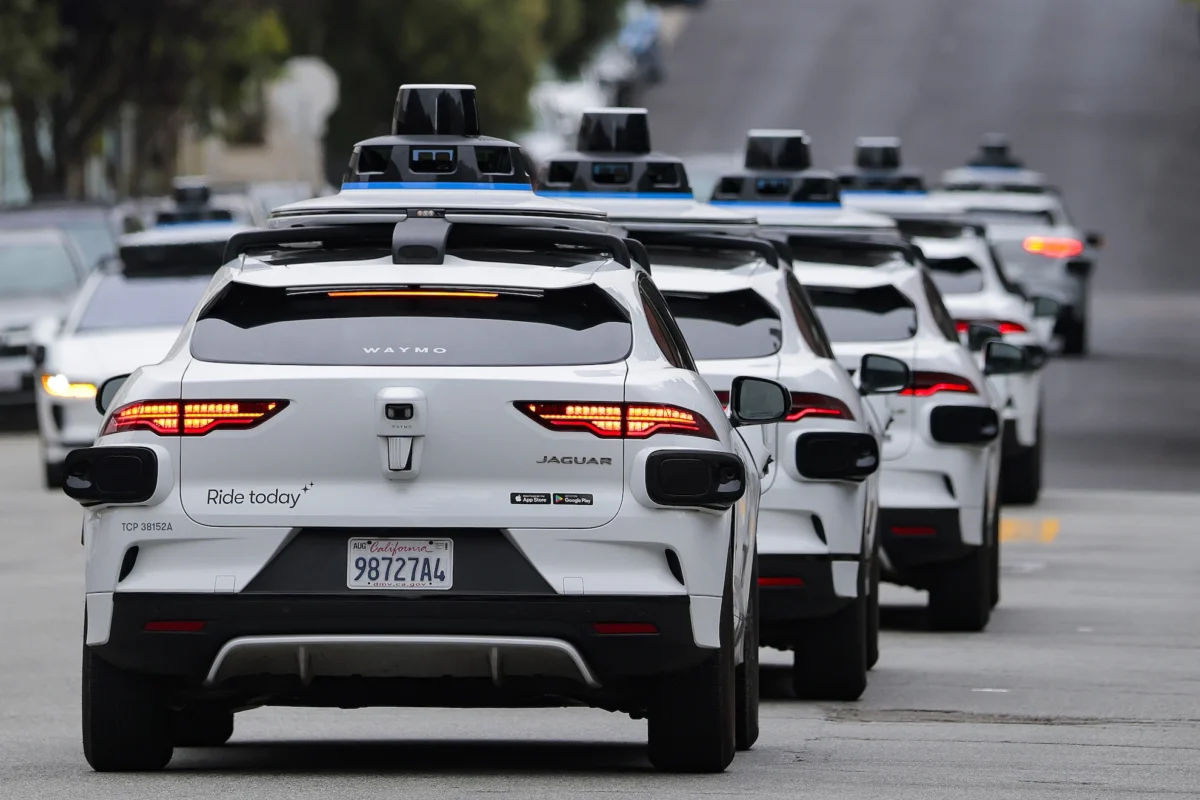
- Waymo’s Multi-Sensor, Interpretable Architecture: Waymo’s approach, dubbed the "Waymo Driver," relies on a redundant hardware suite combining LiDAR (Light Detection and Ranging), radar, and high-resolution cameras. Waymo integrates this hardware into vehicles manufactured by third-party partners (such as Jaguar Land Rover and Geely’s Zeekr). Philosophically, Waymo favors a modular software architecture where AI models handle specific tasks—such as perception, behavior prediction, and path planning—allowing human engineers to interpret, audit, and debug every step of the decision-making process.
- Tesla’s "Vision-Only," End-to-End Deep Learning: Led by CEO Elon Musk, Tesla has discarded LiDAR and radar in favor of "Tesla Vision," an architecture reliant solely on optical cameras. On the software side, Tesla has pivoted toward a "pure end-to-end" neural network. This system ingests raw camera pixels and directly outputs vehicle control commands (steering, braking, and acceleration). This "black box" approach mimics human visual processing and cognitive decision-making, relying on massive computational scale and fleet data rather than hand-coded rules or redundant sensor modalities.
As Tesla prepares to formally introduce its dedicated "Cybercab"—a two-seater autonomous vehicle designed without a steering wheel or pedals—Waymo has chosen this critical window to assert its technological and operational maturity, sparking an intense industry-wide debate.
Chronology of the Autonomy Conflict
To understand the sudden escalation of this corporate rivalry, it is necessary to trace the parallel timelines of both companies’ development and their recent convergence on the public stage.
[2019-2020] -----------------------------> [Early 2026] ----------------------------> [Aug 10, 2026] -------------------------> [Aug 26, 2026] -----------------------------> [Late Aug 2026] -----------------------------> [Sept 3, 2026]
Tesla promises 1M robotaxis;               Tesla tests driverless Model Ys            Waymo publishes "10 AI Lessons"          Waymo VP critiques "end-to-end" AI;         Waymo expands to 3 new markets;               Tesla scheduled to formally
Waymo quietly scales geofenced fleets.     in Texas and Florida.                      blog post, sparking debate.               social media debate erupts on X.            Tesla registers Cybercabs with Texas DMV.     unveil "Cybercab" robotaxi.
The Early Promises and Slow Burns (2019–2025)
For years, the battle between Waymo and Tesla was largely theoretical. In 2019, Elon Musk famously predicted that Tesla would have one million autonomous robotaxis on the road by 2020. That deadline passed, and Tesla’s "Full Self-Driving" (FSD) software remained a Level 2 driver-assist system requiring constant human supervision. Meanwhile, Waymo quietly and methodically deployed its fully driverless commercial ride-hailing service, Waymo One, in geofenced metropolitan areas, starting in Phoenix, Arizona, before expanding to San Francisco and Los Angeles.
The Summer of 2026: Escalation and Expansion
- August 10, 2026: Waymo publishes a detailed technical blog post titled "10 AI Lessons," outlining its findings from millions of miles of autonomous operations. The post explicitly questions the viability of camera-only and pure end-to-end AI systems.
- August 25, 2026: Waymo announces a major commercial expansion, launching its robotaxi service in three new metropolitan markets: Denver, San Diego, and Tampa. This brings Waymo’s footprint to more than a dozen U.S. cities.
- August 26, 2026: In an interview with Axios, Srikanth Thirumalai, Waymo’s Vice President of Driving Software, doubles down on the company’s critiques of Tesla’s software philosophy, warning of the catastrophic risks of "black box" AI failures in physical systems.
- Late August 2026 (The Weekend Spat): Waymo’s public relations push triggers a defensive reaction from Tesla loyalists and Wall Street analysts on social media. A heated debate erupts on X (formerly Twitter), highlighted by clashes between prominent Tesla analyst Pierre Ferragu and Waymo spokesperson Ethan Teicher.
- Late August 2026: Regulatory filings reveal that Tesla has begun registering its new "Cybercab" vehicles with the Texas Department of Motor Vehicles (DMV). Concurrently, reports emerge that Tesla has quietly begun removing human safety drivers from its experimental Model Y robotaxi test fleets in Austin, Texas, and Jacksonville, Florida.
- September 3, 2026: Tesla is scheduled to host a highly publicized product launch event to formally introduce the Cybercab and outline the commercialization roadmap for the Tesla Network.
Supporting Data and Technical Paradigms
The dispute between Waymo and Tesla is underpinned by vastly different operational datasets, hardware configurations, and manufacturing targets.
Waymo’s Empirical Footprint
Waymo’s arguments are backed by a substantial track record of real-world commercial operations. The company’s cumulative data highlights its mature position in the market:
- Real-World Mileage: Waymo has logged more than 200 million real-world autonomous miles across its testing and commercial operations.
- Active Fleet Size: Waymo operates a fleet of approximately 4,000 active robotaxis.
- Weekly Ride Volume: The company facilitates over 500,000 paid passenger trips per week across 14 U.S. cities, including its newest markets in Denver, San Diego, and Tampa.
- Sensor Configuration: Each Waymo vehicle is outfitted with a proprietary suite of 29 cameras, 5 LiDAR sensors, and 6 radar units, providing 360-degree overlapping fields of view and redundant physical sensing modalities.
Tesla’s Projected Scale and Hardware Strategy
Tesla is betting that its manufacturing prowess and massive consumer fleet data will allow it to leapfrog Waymo’s localized approach:
- Production Targets: Internal Tesla filings indicate the company is aiming to manufacture more than 125,000 Cybercabs annually once production reaches scale.
- Vehicle Architecture: The Cybercab is a purpose-built, two-seater gold sedan designed without traditional controls (no steering wheel, no pedals). It utilizes a smaller, highly efficient battery pack and a simplified chassis to minimize production costs.
- Sensor Configuration: The Cybercab, like Tesla’s consumer vehicles, relies entirely on an array of 8 optical cameras connected to an onboard "Full Self-Driving" computer running deep neural networks.
- Testing Status: While Tesla’s consumer fleet has driven billions of miles using supervised FSD, its unsupervised robotaxi testing has remained small. Until recently, Tesla operated only a limited trial of modified Model Y SUVs in Texas and Florida, only pulling safety monitors from the majority of those vehicles in late August 2026.
The Market Opportunity
Both companies are vying for dominance in an industry that financial institutions believe will reshape global transportation:
- Goldman Sachs projects that the global robotaxi market will reach $400 billion by 2035.
- Morgan Stanley offers an even more bullish outlook, characterizing autonomous ride-hailing as a $1 trillion addressable market for early leaders.
Official Responses and Key Arguments
The public discourse between the two camps highlights the deeply entrenched philosophies of both organizations.
Waymo’s Critique: The Danger of "Black Box" Hallucinations
Srikanth Thirumalai, Waymo’s VP of Driving Software, laid out the scientific and practical objections to a vision-only, end-to-end AI approach in his blog post and subsequent Axios interview:
"Cameras are incredible, but they aren’t enough. For years, there’s been a debate over whether cameras alone could solve full autonomy. Now, after more than 200 million real-world miles, the data is clear: safe, fully autonomous operations at scale require more. By combining inputs from cameras, lidar, and radar, the Waymo Driver creates a rich, redundant world view that no single sensor can replicate."
Thirumalai particularly warned against relying on "pure end-to-end" neural networks that map camera pixels directly to vehicle control inputs, calling them highly susceptible to unpredictable, un-traceable failures:
"Even the best AI models with trillions of parameters still hallucinate. There is no click reboot or reload or refresh [in] physical AI. You have to deal with the consequences of it."
Waymo’s spokesperson, Ethan Teicher, underscored the company’s confidence in its data-driven, safety-first philosophy. Responding to online criticism, Teicher shared a promotional image from the film John Wick depicting the protagonist surrounded by guns pointed at his head, jokingly captioning it:
"How it feels to say your data and record of success leads you to believe driverless mileage, AI interpretability, and multiple sensor types are critical for safe, fully autonomous driving at scale."
The Tesla Counter-Argument: The Innovator’s Dilemma
Tesla and its supporters view Waymo’s reliance on expensive, customized hardware and geofenced mapping as a dead-end approach that will ultimately be disrupted by generalized AI.
Elon Musk has long dismissed LiDAR as a costly, unnecessary "crutch," arguing that because the human driving ecosystem is designed for visual input (eyes and brains), artificial systems should mimic this paradigm using cameras and neural networks.
Pierre Ferragu, an analyst and managing partner at New Street Research who closely covers Tesla, mounted a fierce defense of Tesla’s strategy on X, arguing that Waymo’s complex infrastructure will eventually render it obsolete:
"Arguments they bring forward are poor. My read: Waymo built a driving gas plant that AI at scale makes irrelevant, and now falls into incumbent rhetoric. Innovator dilemma 101."
Ferragu and other Tesla proponents argue that while Waymo’s modular, multi-sensor approach may work in highly mapped, geofenced urban areas, it cannot scale globally at a reasonable cost. In contrast, they believe Tesla’s vision-only system, trained on billions of miles of real-world consumer driving data, will eventually function anywhere in the world without requiring expensive hardware or localized HD mapping.
Implications: The Economic and Regulatory Road Ahead
The clash between Waymo and Tesla is not merely an academic debate; it will dictate the economic viability, regulatory acceptance, and competitive landscape of the autonomous transportation sector.
| Feature / Dimension | Waymo (Multi-Sensor Paradigm) | Tesla (Vision-Only / End-to-End) |
|---|---|---|
| Primary Sensors | LiDAR, Radar, High-Res Cameras | Optical Cameras Only |
| Software Architecture | Modular & Interpretable AI | Pure End-to-End Neural Network |
| Hardware Costs | High (expensive sensors + vehicle retrofit) | Low (inexpensive cameras + integrated chassis) |
| Scalability | Slow (requires HD mapping & geofencing) | Rapid (generalized AI, theoretically un-geofenced) |
| Regulatory Standing | Proven commercial safety record | Facing ongoing scrutiny & investigation |
The Cost Equation and Unit Economics
Waymo’s conservative technological approach is inherently capital-intensive. Because Waymo does not manufacture its own vehicles, it must purchase cars from partners—such as Geely’s Zeekr—and retrofit them with expensive sensor suites. This process is further complicated by geopolitical and economic factors, such as paying high import tariffs on Chinese-made vehicles like the Zeekr-made Ojai before they are even outfitted with self-driving tech.
Tesla, by contrast, is a vertically integrated manufacturer. By designing and building the Cybercab in-house and omitting expensive LiDAR and radar units, Tesla aims to achieve unprecedentedly low unit costs. If Tesla’s vision-only AI successfully achieves Level 4 autonomy, its dramatically lower capital expenditures could allow it to drastically undercut Waymo, Uber, and traditional ride-hailing services on per-mile pricing.
The Safety and Regulatory Hurdle
While Tesla holds a clear advantage in projected manufacturing costs, Waymo holds a massive lead in regulatory trust and proven safety metrics. Operating a commercial robotaxi network requires navigating complex real-world edge cases:
- Extreme Weather: Heavy rain, fog, and snow can severely degrade camera visibility. Waymo’s active radar and LiDAR provide redundant sensing capabilities that can "see" through adverse atmospheric conditions where optical cameras struggle.
- Emergency Situations: Navigating around unpredictable emergency vehicles, active construction zones, and school crossings requires highly interpretable decision-making systems. Waymo’s modular software allows engineers to hard-code specific safety behaviors for these scenarios.
- The "Black Box" Problem: If an end-to-end neural network makes a catastrophic error, it is incredibly difficult for engineers to diagnose why the network made that decision. Regulators, including the National Highway Traffic Safety Administration (NHTSA), are historically wary of systems that lack clear, auditable decision paths.
Conclusion
As Tesla prepares to unveil the Cybercab on September 3, the autonomous vehicle industry stands at a critical crossroads. Waymo has proved that its highly redundant, carefully monitored approach works safely and commercially in major metropolitan areas today. Tesla is gambling its entire corporate future on the belief that generalized AI can solve the driving problem cheaper, faster, and without the need for redundant hardware.
The coming months will determine whether Waymo’s "driving gas plant" remains the gold standard for passenger safety, or if Tesla’s end-to-end vision-only system will render the multi-sensor paradigm an expensive relic of the early autonomous era.
