





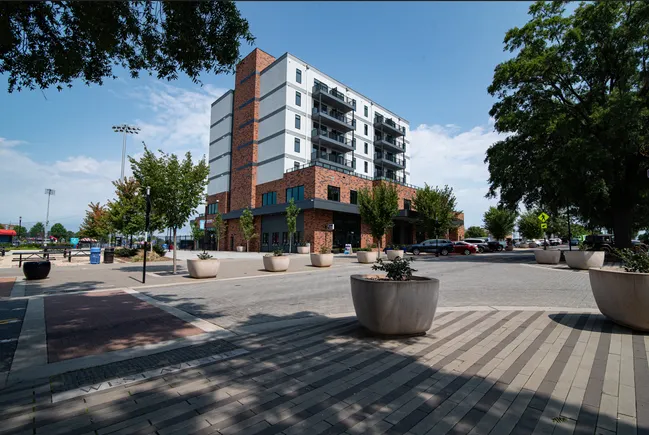
For decades, the American landscape has been defined by a ubiquitous, often invisible, tax on development: the parking minimum. Local zoning codes have historically forced builders to construct a specific number of parking spaces for every residential unit or commercial square foot, regardless of whether that space was actually needed. Today, however, a quiet revolution is sweeping across state legislatures. As housing affordability crises grip the nation, policymakers are increasingly viewing these mandates as a primary antagonist to density, affordability, and sustainable urban design.
The Main Facts: A Legislative Pivot
The era of mandatory parking is drawing to a close in several jurisdictions as state governments override local zoning ordinances that have long prioritized vehicle storage over human housing. The movement is gaining momentum, shifting from isolated municipal pilot programs to sweeping statewide legislation.
At its core, the policy shift aims to decouple housing production from parking construction. By eliminating or drastically reducing parking minimums, states are empowering developers to decide how much parking is financially and logistically necessary for a project. This shift is not merely an aesthetic change; it is an economic intervention designed to lower the barrier to entry for new housing developments, particularly in urban cores where land is scarce and expensive.
Chronology: From Municipal Experiments to Statewide Mandates
The path to current legislative action was paved by years of municipal-level experimentation.
- Pre-2020: Cities like Minneapolis, Minnesota, and Hartford, Connecticut, garnered national headlines by becoming some of the first to eliminate parking minimums citywide, citing the need to reduce the "car-dependency" that plagued their urban footprints.
- 2022: California marked a significant milestone with the passage of AB 2097. This legislation prohibited local governments from imposing parking minimums on new developments located within a half-mile radius of a major transit stop. The move was a direct attempt to leverage existing infrastructure to promote transit-oriented development.
- 2023-2024: Washington state followed suit with a comprehensive measure aimed at curbing the local government’s ability to force excessive parking. The legislation strictly limits the requirements for multifamily and single-family units, preventing local councils from demanding more than half a parking space per multifamily unit or one space per single-family unit.
- 2025 and Beyond: The momentum continues, with North Carolina’s legislative framework set to take effect in January 2027. This upcoming transition represents a significant expansion of the movement into the American South, suggesting that the critique of parking mandates has moved beyond progressive coastal hubs and into the mainstream political discourse.
Supporting Data: The High Cost of Stagnant Space
The economic argument against parking minimums is grounded in hard numbers. In many metropolitan markets, the cost of constructing a single parking space—whether in an underground structure or a multi-story garage—can range from $60,000 to $80,000.
When a developer is forced to build a specific number of spots, those costs are inevitably passed on to the renter or buyer. Experts point out that these mandates often create a "parking tax" on every housing unit built. Furthermore, land that is legally required to remain as a parking lot is land that cannot be used for additional housing units, public green space, or commercial storefronts.
In dense urban infill projects, this constraint is particularly punishing. A developer looking to convert a small, underutilized lot into a modest apartment building may find the project financially unfeasible if they are required to include a parking garage that occupies 40% of the buildable square footage. By eliminating these requirements, the math for small-scale and infill development changes significantly, often turning "dead" lots into viable housing sites.
Official Responses and Industry Sentiment
The building and architecture industries have largely welcomed this legislative trend. For organizations like the National Association of Home Builders (NAHB), parking reform represents a pragmatic solution to a growing housing supply deficit.
Nicholas Julian, the director of land use at the NAHB, has been vocal about the impact of these changes. "Parking reform—often the elimination or sharp reduction of minimum parking requirements—has proven to be one of the most impactful and widely adopted tools for improving project feasibility, particularly for infill and small-scale development," Julian noted in a recent correspondence.
From the perspective of urban planners, the shift represents a return to market-driven development. Planners argue that if there is a true market demand for parking, developers will build it. By mandating it, governments were previously forcing a "one-size-fits-all" solution on diverse neighborhoods, ignoring the reality that residents in transit-rich areas or lower-income households may prefer to save money on rent rather than pay for a parking spot they do not use.
Implications for the Future of Urban Planning
The implications of this policy shift are profound and multifaceted, touching on housing affordability, environmental sustainability, and urban aesthetics.
Housing Affordability
The most immediate goal of these reforms is to lower the cost of living. By reducing the capital expenditure required for each project, developers can offer lower rents or lower purchase prices. In the long term, this could lead to a broader distribution of affordable housing options in high-opportunity areas that were previously prohibitively expensive due to the high construction costs of mandated parking.
Environmental Impact and Transit-Oriented Development
Environmental advocates have long campaigned against parking minimums, arguing that they subsidize car ownership and discourage the use of public transit. When parking is abundant and free, driving becomes the most convenient option. By reducing the availability of parking, cities are effectively nudging residents toward public transportation, biking, and walking. This, in turn, helps meet climate goals by reducing vehicle miles traveled and lowering the carbon footprint of the urban population.
Urban Design and "The Missing Middle"
Parking mandates have historically stifled "missing middle" housing—duplexes, triplexes, and small apartment buildings that bridge the gap between single-family homes and massive high-rise developments. When parking requirements are high, small developers often find it impossible to build these mid-sized projects. Removing these requirements allows for a more organic, human-scale development pattern that is characteristic of the historic neighborhoods many people cherish.
The Challenges Ahead
Despite the successes, the transition will not be without friction. Local governments, which often rely on parking requirements to manage perceived traffic congestion, may push back against state preemption. There are valid concerns regarding street parking overflow in neighborhoods not yet served by robust transit systems.
As states like North Carolina prepare for their 2027 implementation, the focus will likely shift toward how cities can manage the transition. This may involve the introduction of parking maximums, better management of existing street parking, and increased investment in public transit to ensure that residents have viable alternatives to the private automobile.
Conclusion
The move toward eliminating parking minimums is more than just a zoning update; it is a fundamental rethinking of the American city. By dismantling the regulations that have prioritized the storage of vehicles over the housing of people, states are signaling a new commitment to affordability and urban vitality.
As we look toward 2027 and beyond, the success of these reforms will depend on a delicate balance: providing enough flexibility for developers to create affordable, accessible housing while ensuring that cities remain navigable and vibrant for all residents. One thing is clear: the concrete-covered landscape of the 20th century is beginning to yield to a more flexible, human-centric vision for the 21st.
