




The global transportation ecosystem is undergoing a profound structural shift, characterized by deep vertical integration, heightened geopolitical scrutiny of key technologies, and a rapid restructuring of autonomous delivery alliances. As autonomous vehicle (AV) developers transition from pilot programs to commercial scale, the industry’s focus is shifting from basic software validation to hardware optimization, supply chain security, and capital efficiency.
This comprehensive analysis explores the key developments defining this transition: Waymo’s aggressive push into custom silicon, a federal investigation into the national security risks of foreign-made vehicle sensors, major consolidation and shifts in last-mile delivery partnerships, and the dual reality of global expansion and regulatory friction facing ride-hailing giants like Uber.
Main Facts: Decoupling and Custom Silicon in the Autonomous Era
Waymo’s 5nm Custom Silicon and the Ojai Platform
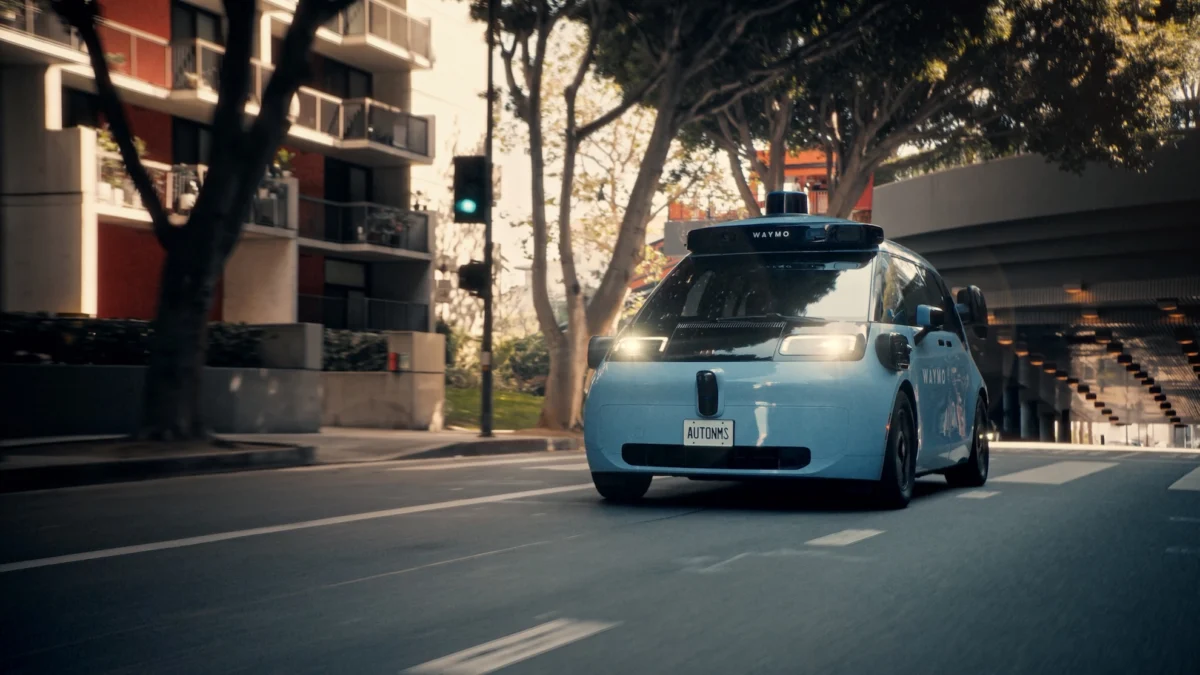
Waymo has transitioned from a software-first developer to a highly integrated hardware-and-software enterprise. Central to this strategy is the deployment of its sixth-generation self-driving system, integrated into its next-generation "Ojai" robotaxi platform. To achieve the cost reductions necessary for commercial profitability, Waymo has designed a custom 5-nanometer (nm) Application-Specific Integrated Circuit (ASIC).
   [13 High-Fidelity Cameras + Lidar + Radar]
                     │ (Massive Raw Data Stream)
                     ▼
       ┌───────────────────────────┐
       │   Waymo 5nm Custom ASIC   │ ──► Processes >1,000 TOPS
       └───────────────────────────┘
                     │ (Filtered, Structured Data)
                     ▼
       ┌───────────────────────────┐
       │   Core Driving "Brain"    │
       └───────────────────────────┘
This custom silicon is engineered to ingest and process massive volumes of raw sensor data—originating from an array that includes 13 high-fidelity cameras, lidars, and radar systems—before the data reaches the vehicle’s central driving computer. By handling preprocessing on dedicated, highly efficient hardware, the ASIC reduces the computational burden and thermal output of the core system.
Waymo reports that the chip delivers over 1,000 Trillions of Operations Per Second (TOPS) of computing performance. This processing power places Waymo’s proprietary hardware in direct competition with high-end commercial automotive platforms, such as Nvidia’s DRIVE AGX Thor processor.
To manufacture and integrate this computing platform, Waymo has assembled a network of silicon, foundry, and memory partners, including TSMC, Samsung, AMD, Micron, SanDisk, Socionext, and Nvidia.
Geopolitical Friction: US Government Probes Chinese Lidar
As autonomous systems become integrated into domestic infrastructure, the hardware supply chain is facing unprecedented national security scrutiny. The Idaho National Laboratory—a federally funded research center operated by the U.S. Department of Energy—has initiated an investigation to evaluate whether light detection and ranging (lidar) sensors manufactured by Chinese firms pose security vulnerabilities to U.S. infrastructure.
Lidar sensors emit laser pulses to construct precise 3D maps of a vehicle’s surroundings. Because these sensors collect high-resolution spatial data of public roads, government facilities, and critical infrastructure, security agencies are concerned about potential data exfiltration, remote firmware manipulation, or backdoors built into foreign-made sensor suites.

Crucially, sources indicate that this federal research is funded by a private coalition of companies operating within the electric vehicle (EV) and autonomous vehicle sectors, signaling that domestic industry players are proactively looking to de-risk their supply chains from Chinese components ahead of potential federal bans or tariffs.
The Evolving Logistics and Last-Mile Landscape
The economics of sidewalk and aerial delivery are forcing startups and platforms to diversify their operations. Serve Robotics, a sidewalk delivery specialist, has experienced a major shift in its capital and partner structure. Following Uber’s decision to phase out its use of Serve’s sidewalk robots and divest its entire equity stake in the company, Serve has diversified its partner portfolio to mitigate platform risk.
Serve has secured a multi-city deployment contract with Grubhub and expanded its existing delivery operations with DoorDash.
Concurrently, Also—a technology startup that spun out of electric vehicle manufacturer Rivian in March 2025—has raised $150 million in a Series D funding round. Initially positioned as a micromobility firm focused on electric cargo quads and e-bikes, Also has shifted its focus toward developing autonomous small electric vehicles, backed by a commercial contract with DoorDash.
Chronology of Key Events
The rapid evolution of autonomous and electric mobility is illustrated by the following timeline of recent and upcoming milestones:
- March 2025: Also officially spins out of Rivian as an independent micromobility and low-speed logistics entity.
- Early August 2026: Uber divests its entire equity stake in Serve Robotics and signals a reduction in sidewalk robot deployment on the Uber Eats platform, set to conclude in 2027.
- August 17, 2026: Uber announces a strategic investment in and partnership with drone-delivery pioneer Zipline, targeting mid-to-late-decade scaling.
- August 18, 2026: Swedish autonomous freight developer Einride signs an agreement to purchase 500 Tesla Semis to integrate into its European and North American logistics fleets. Concurrently, Detroit-based custom EV van manufacturer Grounded secures a $5 million seed round.
- August 19, 2026: Waymo opens its Ojai-platform robotaxis to all app users in Los Angeles, San Francisco, and Phoenix. Concurrently, Also announces its $150 million Series D funding round, and Hyundai’s luxury brand, Genesis, unveils the GV90 three-row electric SUV.
- August 20, 2026: Nevada regulators grant commercial robotaxi operating permits to Tesla, Uber, and Waymo for Clark County (Las Vegas), authorizing a combined fleet limit of up to 8,000 vehicles.
- August 21, 2026: The Dutch Data Protection Authority imposes an €825 million ($966 million) fine on Uber for algorithmic management violations. Concurrently, Chinese regulators announce a sweeping multi-brand safety recall affecting over 3 million vehicles, including Tesla models, regarding emergency door release mechanisms.
- Late 2026 (Projected): Amazon targets the expansion of its Prime Air drone delivery network to service nearly 500 cities across the United States.
- December 2029 (Projected): Uber and Zipline target a combined operational scale of 1 million autonomous drone deliveries per day globally.
Supporting Data and Financial Analysis
The capital requirements and regulatory penalties in the advanced transportation sector highlight the high financial stakes of these technologies.
Venture Capital and Fleet Procurement Metrics
| Company | Deal Type / Event | Amount / Volume | Key Investors / Partners | Strategic Focus |
|---|---|---|---|---|
| Also | Series D | $150,000,000 | Prysm Capital, Eclipse, Greenoaks, MVP | Autonomous low-speed EVs |
| Vessev | Series A | $19,000,000 | Blackbird Ventures, GD1, Rypples, K1W1 | Marine hydrofoil EVs |
| Grounded | Seed Round | $5,000,000 | Also Capital, The 81 Collection, SpaceX Alumni | Modular EV & gas van outfitting |
| Einride | Fleet Purchase | 500 Units | Tesla (Vendor) | Heavy-duty autonomous freight |
The rapid funding cadence of Also—accumulating $455 million in total funding within roughly 17 months of its spinout from Rivian—underscores the high cost of developing low-speed autonomous hardware.
Similarly, Vessev’s $19 million Series A points to growing venture interest in maritime decarbonization through electric hydrofoil technology, which reduces drag to make battery-electric marine propulsion commercially viable.

Compute and Fleet Capacity Performance
- Waymo ASIC Performance: $>1,000$ TOPS (Trillion Operations Per Second) on a 5nm node architecture.
- Waymo Sensor Array: 13 high-fidelity cameras, alongside integrated radar and lidar units per Ojai-generation vehicle.
- Nevada Robotaxi Cap: Up to 8,000 total permitted commercial autonomous vehicles in Clark County over a 12-month window.
- Regulatory Penalties: The Dutch Data Protection Authority’s €825 million ($966 million) fine against Uber represents one of the largest General Data Protection Regulation (GDPR) penalties levied against a ride-hailing platform, targeting automated driver suspension algorithms.
Official Responses and Corporate Statements
The intersection of state regulation, national security, and corporate deployment has prompted a series of official statements and disclosures:
On the U.S. National Security Lidar Investigation
The federal probe into Chinese-manufactured lidar components by the Idaho National Laboratory has drawn a wall of silence from major automotive and autonomous developers.
When queried regarding their involvement or awareness of the security review, representatives from Rivian, General Motors, Ford, Kodiak, Lucid Motors, Nuro, and Uber all formally stated they had no knowledge of the ongoing investigation. Prominent industry suppliers and operators, including Aurora, Nvidia, and Zoox, declined to comment on the federal inquiry or their current sensor sourcing policies.
On Regulatory Investigations and Compliance
In response to the National Highway Traffic Safety Administration’s (NHTSA) ongoing investigation into an incident where a Waymo robotaxi struck a child at low speed, Waymo has submitted its formal response and supporting documentation to federal regulators. However, the publicly released versions of these filings remain heavily redacted to protect proprietary system architecture and operational data.
Regarding the record-setting €825 million fine levied by the Dutch Data Protection Authority, Uber has expressed strong disagreement with the regulator’s interpretation of automated decision-making frameworks under GDPR Article 22. The company maintains that its driver suspension protocols involve sufficient human oversight and are necessary to preserve platform safety. Uber has confirmed its intention to appeal the decision.
Implications for the Future of Mobility
The Rise of Vertical Integration and Custom Silicon
Waymo’s decision to design its own 5nm ASIC signals a major shift in how autonomous vehicle companies approach hardware. Historically, AV developers relied on off-the-shelf graphics processing units (GPUs) and general-purpose chips. However, the thermal, power, and computational demands of Level 4 autonomous driving require highly specialized silicon.
┌──────────────────────────────────────────────────────────┐
│              Benefits of Custom 5nm ASICs                │
├─────────────────────────────┬────────────────────────────┤
│      Technical Benefit      │     Commercial Impact      │
├─────────────────────────────┼────────────────────────────┤
│ Low Latency Data Processing │ Faster Hazard Avoidance    │
│ Low Power Consumption       │ Extended Battery Range     │
│ Low Thermal Output          │ Simplified Cooling Systems │
│ Lower Per-Unit Cost (Scale) │ Path to Robotaxi Profit    │
└─────────────────────────────┴────────────────────────────┘
By preprocessing data on a custom chip, Waymo can use smaller, less expensive central computers, reduce vehicle power consumption (which extends electric driving range), and lower the per-unit cost of its self-driving system. This move mirrors Apple’s transition to its M-series chips and Tesla’s development of its Full Self-Driving (FSD) computer, suggesting that long-term success in autonomous mobility requires deep vertical integration of software and custom hardware.
Geopolitical Realignment of the AV Supply Chain
The investigation by the Idaho National Laboratory into Chinese-made lidar sensors highlights how geopolitical tensions are reshaping the automotive supply chain. If the U.S. government restricts or bans Chinese lidar brands like Hesai or RoboSense, AV developers will be forced to transition to Western alternatives, such as those from Ouster, Luminar, or AEye.

Because sensor integration requires extensive software calibration and physical vehicle redesigns, sudden regulatory bans could delay commercial rollouts and increase manufacturing costs for US-based AV fleets.
Platform Diversification in Last-Mile Logistics
The shifting partnerships among Serve Robotics, Uber, Grubhub, and DoorDash illustrate the risks of relying on a single dominant platform. For hardware-centric startups, platform dependency can be highly risky if a primary partner changes its strategic direction or decides to build its own technology.
By expanding its operations with Grubhub and DoorDash after Uber’s divestment, Serve Robotics has demonstrated a viable strategy for low-speed autonomous delivery providers: remaining platform-agnostic to maximize utilization and reduce market risk.
Algorithmic Management and Labor Regulation
The €825 million fine imposed on Uber by European regulators has broad implications for gig-economy platforms. The ruling targets the use of fully automated algorithms to deactivate driver accounts without sufficient human review.
As regulatory bodies globally increase their scrutiny of automated systems, ride-hailing and delivery platforms will need to invest in robust, human-in-the-loop compliance frameworks to manage their workforces. This regulatory pressure may accelerate the transition to fully autonomous fleets, where platforms manage vehicles they own or lease rather than navigating the legal complexities of algorithmic gig-labor management.
