




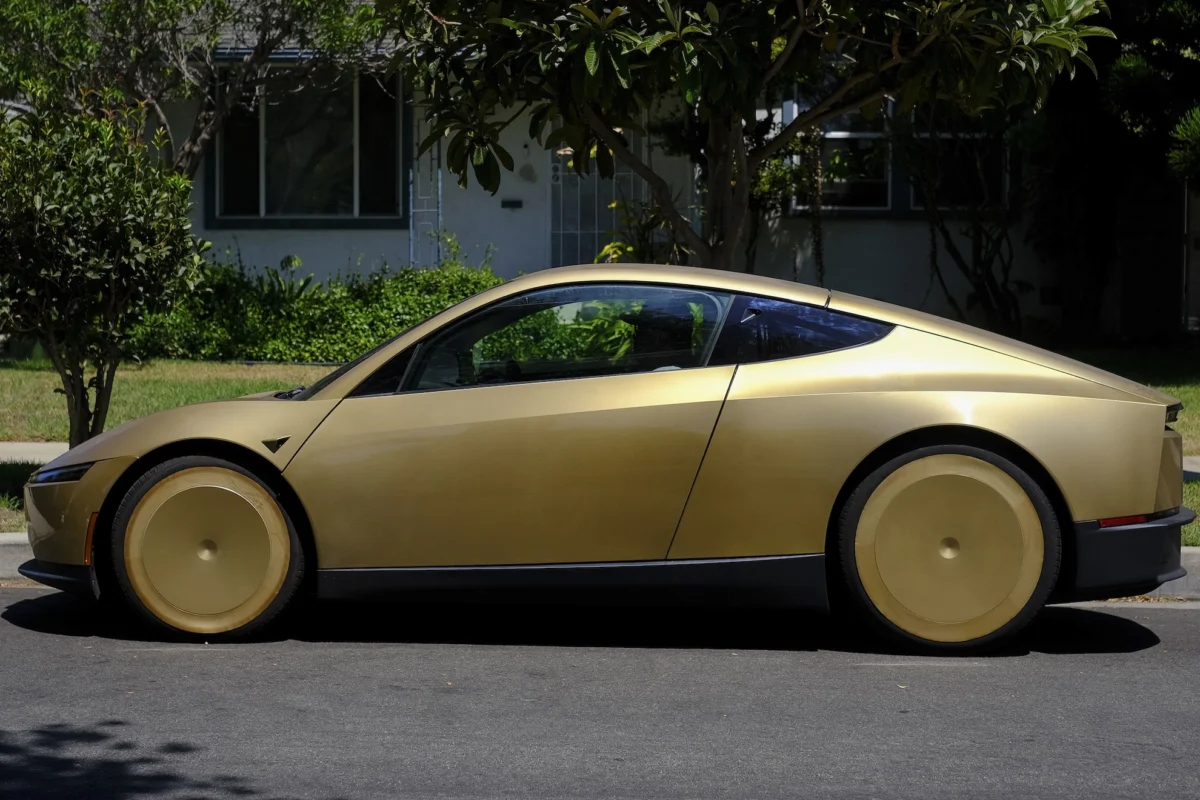
The global transportation sector is undergoing a profound structural transformation, driven by the convergence of artificial intelligence, autonomous vehicle (AV) technology, and shifting macroeconomic realities. This transition was thrown into sharp relief recently following Tesla’s highly anticipated "Cybercab" reveal in Austin, Texas. The event, which was intended to solidify Tesla’s positioning as an artificial intelligence and robotics powerhouse, instead highlighted the steep regulatory, operational, and technological hurdles that lie ahead for the autonomous vehicle industry.
At the same time, the broader mobility landscape is experiencing intense consolidation, regulatory scrutiny, and a shifting consumer appetite, characterized by multi-billion-dollar corporate acquisitions, federal safety investigations, and a pragmatic market embrace of hybrid propulsion systems.
1. Main Facts: The Austin Reveal and the State of Play
Tesla’s Cybercab debut in Austin, Texas, was designed to be a watershed moment for the company’s autonomous driving ambitions. Featuring a vehicle completely devoid of traditional manual controls—lacking both a steering wheel and pedals—the Cybercab represents Tesla’s vision for a fully decentralized, vision-based robotaxi network. However, the market reception was distinctly muted. Wall Street analysts and investors expressed disappointment over the event’s lack of operational detail, concrete timelines, and the unusually subdued, quiet atmosphere that contrasted sharply with the festival-like spectacles of Tesla’s past product launches.
Adding to the industry’s surprise was the notable absence of Tesla CEO Elon Musk at the event. Musk has spent years asserting that Tesla’s long-term valuation and corporate identity are fundamentally tied to its progress in robotics and artificial intelligence. His absence left industry observers searching for answers regarding the company’s near-term strategic roadmap.
                           ┌───────────────────────────┐
                           │    Tesla Cybercab Event   │
                           └─────────────┬─────────────┘
                                         │
                    ┌────────────────────┴────────────────────┐
                    ▼                                         ▼
     ┌─────────────────────────────┐           ┌─────────────────────────────┐
     │      Market Reception       │           │    Regulatory Obstacles     │
     ├─────────────────────────────┤           ├─────────────────────────────┤
     │ • Wall Street unimpressed   │           │ • NHTSA investigation       │
     │ • Lack of operational detail│           │ • Self-certification clash  │
     │ • CEO Elon Musk absent      │           │ • Manual control mandate    │
     └─────────────────────────────┘           └─────────────────────────────┘
The reveal was immediately met with regulatory friction. Just hours after Tesla deployed its first physical test fleet of Cybercabs on public streets in Austin, the National Highway Traffic Safety Administration (NHTSA) opened a formal investigation into the deployment. Federal Motor Vehicle Safety Standards (FMVSS) currently mandate manual driving controls, such as brake pedals and steering wheels. While the Department of Transportation (DOT) has proposed amending these requirements to accommodate purpose-built autonomous vehicles, the existing rules remain legally binding. Tesla’s decision to bypass the standard exemption process and instead "self-certify" the vehicles prompted immediate federal oversight.
Beyond Tesla’s regulatory challenges, the broader mobility sector saw significant developments:
- Consolidation & Investment: Uber’s board formally approved a $15 billion takeover bid for Delivery Hero, while German insurance giant Allianz entered preliminary talks to acquire the UK’s AA roadside assistance organization for £5 billion ($6.77 billion).
- Competitive AV Expansion: Waymo aggressively expanded its commercial operations to Denver, San Diego, and Tampa, while Zoox extended its Las Vegas robotaxi service to include airport transfers at Harry Reid International Airport.
2. Chronology: The Race for Autonomous Dominance
The events of early September 2026 outline a rapid sequence of strategic maneuvers by autonomous vehicle operators, regulators, and legacy mobility platforms:
  Late August 2026              Early September 2026           Mid-September 2026
───────┬───────────────────────────────┬───────────────────────────────┬──────────►
       │                               │                               │
       ▼                               ▼                               ▼
  • Waymo expands service         • Tesla Cybercab debut          • NHTSA opens probe
  • Uber trims headcount          • Waymo mounts critique         • Allianz eyes AA
  • Alteon & Newlight fund        • Delivery Hero board           • May Mobility/NTT
    pre-seed/seed rounds            approves Uber's $15B bid        deploy in Japan
Late August 2026: Tactical Positioning and Capital Allocation
The run-up to the Cybercab reveal saw significant capital movement across the mobility sector. Deep-tech and clean-transportation startups secured critical early-stage funding:

- Bengaluru-based Alteon closed a $2.5 million pre-seed round to develop autonomous aircraft utilizing dynamic soaring techniques.
- Hydrogen-injection pioneer Newlight raised a $9 million seed round aimed at improving cargo ship efficiency.
- Heavyweight automotive supplier Magna International increased its footprint in the micro-mobility sector, committing an additional $35 million to India’s Yuma Energy battery-swapping network.
- Concurrently, Uber initiated a sweeping corporate restructuring, laying off approximately 3,300 employees—roughly 10% of its global workforce—to streamline its engineering, science, and delivery divisions ahead of its major acquisition push.
Early September 2026: Preemptive Strikes and the Austin Debut
Days before Tesla’s event, Alphabet’s Waymo went on the offensive. The company publicly questioned the viability of pure "end-to-end" artificial intelligence systems for autonomous driving, arguing that safe vehicle operation requires a redundant mix of sensors, including Lidar, radar, and cameras. Waymo coupled this rhetorical offensive with physical expansion, opening its commercial passenger services to the public in Denver, San Diego, and Tampa.
On the evening of the Cybercab reveal, Tesla showcased its sleek, steering-wheel-free vehicles in Austin, pitching them to prospective private fleet operators. Within hours of the curtain falling, the NHTSA intervened, launching an investigation into the safety and compliance of the newly deployed Cybercab test vehicles on Austin streets.
Mid-September 2026: M&A Acceleration and Global Deployments
Following the Austin event, corporate consolidation accelerated. Delivery Hero’s board officially recommended that its shareholders accept Uber’s $15 billion acquisition offer. In Europe, Allianz advanced its plans to acquire the roadside rescue giant AA.
In Japan, autonomous vehicle technology startup May Mobility, in partnership with NTT Mobility, finalized plans to deploy self-driving software integrated into Toyota’s e-Palette vehicles on public roads before the end of the calendar year.
3. Supporting Data: Market Scale and Corporate Valuations
A comparative analysis of operational metrics reveals a stark contrast between market valuations and actual physical deployment capacity in the autonomous vehicle sector.
Robotaxi Operational Footprint (Active Commercial/Test Fleets)
| Operator | Active/Registered Vehicles | Primary Geographic Markets | Sensor Suite Philosophy |
|---|---|---|---|
| Waymo | Thousands (Active Commercial) | Phoenix, San Francisco, Los Angeles, Austin, Denver, San Diego, Tampa | Sensor Fusion (Lidar, Radar, Cameras) |
| Tesla | 45 Registered (Texas AV Tracker) | Austin (Testing only) | Pure Vision (Cameras only, End-to-End AI) |
| Zoox | Hundreds (Active Testing/Commercial) | Las Vegas (incl. Airport), San Francisco, Seattle | Sensor Fusion (Lidar, Radar, Cameras) |
While Tesla boasts a massive global fleet of customer-owned vehicles running its "Full Self-Driving" (FSD) software, its dedicated driverless robotaxi footprint is minuscule. According to the Texas Department of Motor Vehicles’ automated vehicle tracker, Tesla has registered only 45 Cybercabs in the state. By comparison, Waymo’s commercial fleet operates at a scale of thousands of vehicles, facilitating tens of thousands of paid rides weekly across multiple metropolitan areas.
Corporate Transactions and Capital Inflows (Q3 2026)
The volume of capital moving through the transport and logistics sectors underscores the ongoing industry consolidation:
- Uber / Delivery Hero Takeover: A $15 billion transaction, representing one of the largest acquisitions in the quick-commerce and food delivery space to date.
- Allianz / AA Acquisition Talks: Valued at £5 billion ($6.77 billion), a move designed to integrate roadside assistance networks directly with global insurance underwriting.
- Easy Aerial Series B: $20 million raised for autonomous tethered drone systems, highlighting the demand for automated aerial surveillance in the defense and industrial sectors.
- Magna / Yuma Energy Investment: An additional $35 million directed toward expanding battery-swapping infrastructure in emerging markets, specifically targeting electric two- and three-wheelers in India.
4. Official Responses and Regulatory Positions
The tension between rapid technological deployment and public safety has prompted sharp responses from state and federal regulators.

                           ┌───────────────────────────┐
                           │   Regulatory Ecosystem    │
                           └─────────────┬─────────────┘
                                         │
         ┌───────────────────────────────┼───────────────────────────────┐
         ▼                               ▼                               ▼
┌─────────────────┐             ┌─────────────────┐             ┌─────────────────┐
│      NHTSA      │             │  State Agencies │             │   Competitors   │
├─────────────────┤             ├─────────────────┤             ├─────────────────┤
│ Opened probe    │             │ FL & TX block   │             │ Waymo warns     │
│ into Tesla's    │             │ Flock Safety    │             │ against pure    │
│ self-certified  │             │ cameras over    │             │ end-to-end AI   │
│ Cybercabs.      │             │ privacy.        │             │ without sensors.│
└─────────────────┘             └─────────────────┘             └─────────────────┘
The Federal Stance: NHTSA vs. Tesla Self-Certification
The NHTSA’s decision to investigate Tesla’s Cybercab deployment centers on the issue of self-certification. Historically, automakers have self-certified that their passenger cars comply with all applicable FMVSS standards. However, those standards were written with human drivers in mind.
Tesla’s removal of the steering wheel and pedals directly challenges the legal framework of the FMVSS. While the Department of Transportation under the current administration has proposed removing manual control requirements for highly automated vehicles, those changes have not been fully codified into federal law.
In its official communication, the NHTSA emphasized that vehicle manufacturers cannot unilaterally bypass safety standards under the guise of self-certification without demonstrating equivalent safety levels through formal exemption petitions—a route previously taken by competitors like General Motors’ Cruise and Zoox.
State-Level Pushback on Surveillance Technology
Regulatory friction is not limited to autonomous driving. Public safety and surveillance startup Flock Safety is facing severe pushback over its automated license plate readers (ALPR). Both the Florida and Texas Departments of Transportation have moved to block the deployment of Flock’s cameras on state-maintained roadways, citing mounting public privacy concerns and questions surrounding the unauthorized sharing of vehicle tracking data with third-party entities.
Competitor Responses: The Battle Over AI Philosophies
Waymo has utilized its regulatory compliance record as a competitive differentiator. In public statements, Waymo executives have warned against relying solely on end-to-end deep learning models that act as "black boxes." Waymo argues that without deterministic safety boundaries and redundant hardware (such as Lidar), pure vision systems are fundamentally incapable of achieving the safety thresholds required for driverless passenger transportation at scale.
5. Strategic Implications: The Fork in the Road
The events of this period mark a critical juncture for the global transportation industry, carrying deep strategic implications for automakers, tech platforms, and consumers alike.
                                ┌───────────────────────────┐
                                │    Strategic Outcomes     │
                                └─────────────┬─────────────┘
                                              │
         ┌────────────────────────────────────┼────────────────────────────────────┐
         ▼                                    ▼                                    ▼
┌──────────────────┐                 ┌──────────────────┐                 ┌──────────────────┐
│  Tesla's Identity│                 │  The Sensor War  │                 │  The Hybrid Bridge│
├──────────────────┤                 ├──────────────────┤                 ├──────────────────┤
│ Must prove it's  │                 │ Pure Vision vs.  │                 │ Consumers demand │
│ an AI firm, not  │                 │ Lidar/Radar.     │                 │ practical hybrid │
│ just a legacy    │                 │ Safety margins   │                 │ models over pure │
│ auto manufacturer│                 │ dictate cost.    │                 │ electric vehicles│
└──────────────────┘                 └──────────────────┘                 └──────────────────┘
Tesla’s Identity Crisis: Automaker or AI Powerhouse?
Tesla stands at a strategic fork in the road. For years, its premium stock market valuation has been sustained by the promise of autonomy, robotics, and energy storage. If the Cybercab fails to transition from a low-volume novelty (as evidenced by the 45 registered vehicles in Texas) to a high-volume, regulatory-approved commercial network, Tesla risks being re-evaluated by the public markets as a traditional automotive manufacturer.
Furthermore, Tesla’s strategy of selling autonomous vehicles directly to private fleet operators, rather than managing a centralized corporate network, shifts the operational, legal, and maintenance burdens to third parties—a business model that has yet to be proven viable in the highly regulated transport sector.

The Sensor Suite and AI Architecture Debate
The ongoing technological schism between Tesla’s vision-only approach and the rest of the industry’s sensor-fusion strategy will determine the economics of the robotaxi industry.
- Vision-Only: Highly scalable and inexpensive to manufacture, but places an enormous burden on the software to interpret complex, edge-case real-world scenarios perfectly.
- Sensor Fusion: Considerably more expensive per vehicle, but provides the hardware-level redundancy and spatial accuracy that regulators currently favor.
The outcome of the NHTSA’s investigation into Tesla’s self-certified vehicles will likely set a major legal precedent for whether pure vision-based, control-free vehicles can legally operate on public roads in the United States.
The Practical Hybrid Bridge: A Case Study of the Kia Telluride
While the industry debates the timeline for full autonomy and electrification, consumer behavior remains anchored in pragmatic, transitional technologies. This is exemplified by the market performance of vehicles like the 2027 Kia Telluride Hybrid X-Line SX-Prestige.
               2027 Kia Telluride Hybrid: Performance & Economy
               ┌──────────────────────────────────────────────┐
               │  • Engine: Turbocharged 2.5L Inline-Four     │
               │  • Output: 329 Horsepower / 339 lb-ft Torque │
               │  • Efficiency: 31 MPG (Combined Cycle)       │
               │  • Price Point: $61,180 (Fully Loaded)       │
               └──────────────────────────────────────────────┘
The vehicle represents a broader industry trend: legacy automakers are moving away from naturally aspirated V6 engines in favor of highly efficient, turbocharged four-cylinder hybrid powertrains. By delivering 329 horsepower and 339 lb-ft of torque alongside a combined fuel economy of 31 mpg, the Telluride Hybrid provides consumers with the range, utility, and power of a traditional three-row SUV without the charging anxieties or high price premiums associated with large, pure electric vehicles.
Furthermore, while the interior design of modern SUVs increasingly mimics the high-tech, screen-heavy aesthetics of electric vehicles (such as the Kia EV9), the persistence of physical controls for critical HVAC and infotainment functions highlights a lingering consumer resistance to fully digitized interfaces.
Conclusion
The mobility sector is operating at two distinct speeds. On one hand, the vanguard of the industry is engaged in a high-stakes, capital-intensive battle over the regulatory and technological foundations of autonomous driving. On the other hand, commercial consolidation (as seen with Uber and Delivery Hero) and pragmatic, consumer-driven hybridization (exemplified by Kia) are shaping the immediate, day-to-day realities of global transport.
Whether Tesla can successfully navigate its regulatory hurdles and scale its vision-only Cybercab remains an open question. For now, the road to the future is paved with cautious regulatory oversight, heavy corporate consolidation, and hybrid engines.
