





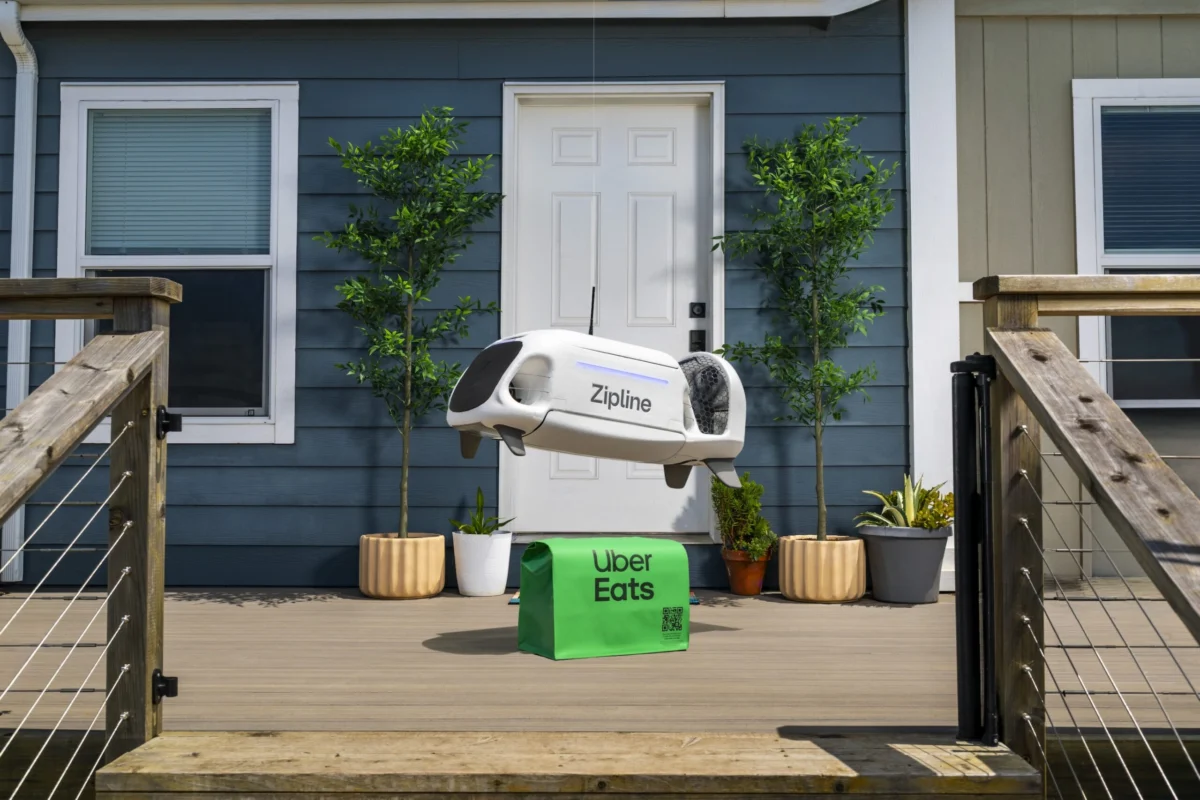
Main Facts: The Uber-Zipline Alliance
In a major bid to dominate the future of instant logistics, Uber Technologies Inc. has announced a strategic partnership and equity investment in Zipline, the world’s largest autonomous drone delivery company. The landmark agreement sets an ambitious operational target: utilizing Zipline’s autonomous aircraft fleet to execute one million commercial deliveries per day on the Uber Eats platform by the end of 2029.
According to joint statements released by the companies, commercial operations are scheduled to commence by the end of 2026. The rollout will initiate within Zipline’s existing operational footprints in the United States before aggressively scaling into "dozens of U.S. cities." While both entities confirmed that Uber has taken an equity stake in the San Francisco-based drone pioneer, the exact financial terms and the specific size of the investment remain undisclosed.
+-----------------------------------------------------------------+
|                      UBER-ZIPLINE PARTNERSHIP                   |
+-----------------------------------------------------------------+
|  * Target: 1 Million daily drone deliveries by end of 2029      |
|  * Launch Window: Late 2026                                     |
|  * Initial Footprint: Existing Zipline U.S. markets             |
|  * Expansion Goal: Dozens of metropolitan U.S. cities           |
|  * Core Vertical: Uber Eats "Quick Commerce" (5-10 min delivery)|
+-----------------------------------------------------------------+
The collaboration represents a critical step forward in Uber’s broader marketplace strategy. Rather than developing proprietary hardware, the ride-hailing and delivery giant is positioning itself as the ultimate aggregator for autonomous vehicle (AV) and aerial robotics technologies. By integrating Zipline’s specialized, ultra-fast delivery drones into the Uber Eats ecosystem, Uber aims to compress delivery times for select orders to between five and ten minutes, unlocking a highly profitable frontier in the "quick commerce" sector.
Chronology: From Proprietary Tech to Platform Aggregator
The partnership with Zipline is the latest evolution in Uber’s turbulent, decade-long relationship with autonomous and aerial transport technologies. The company’s journey from a high-spending hardware developer to an asset-light platform aggregator follows a distinct chronological path:
[2016-2020: Internal R&D Era]
  * Uber ATG works on self-driving cars.
  * Uber Elevate focuses on eVTOL and early drone tests.
       │
       ▼
[2020-2021: Strategic Divestment]
  * Uber sells ATG to Aurora Innovation.
  * Uber sells Elevate to Joby Aviation.
  * Shift to "Asset-Light" aggregator model.
       │
       ▼
[September 2025: Initial Re-entry]
  * Uber partners with Israeli drone startup Flytrex.
  * Minor investment made to test suburban drone delivery.
       │
       ▼
[March 2026: Zipline's Capital Surge]
  * Zipline raises $800M Series H, valuing company at $7.6B.
       │
       ▼
[Late 2026: Commercial Launch]
  * Uber Eats integrates Zipline drones in select U.S. markets.
       │
       ▼
[2028-2029: Long-Term Horizon]
  * Expected expiration/breakup of Waymo partnership (2028).
  * Target milestone of 1 million Zipline flights per day (2029).
The In-House Development Era (2016–2020)
During the mid-to-late 2010s, Uber sought to build its own autonomous future. The company established the Advanced Technologies Group (ATG) to develop self-driving passenger cars, and launched Uber Elevate, an ambitious division focused on urban air mobility, electric vertical takeoff and landing (eVTOL) aircraft, and early-stage drone delivery trials under the Federal Aviation Administration’s (FAA) pilot programs in San Diego.
The Great Divestment and Pivot (2020–2021)
Faced with immense investor pressure to achieve profitability and the astronomical capital expenditures required for hardware development, Uber CEO Dara Khosrowshahi initiated a sweeping restructuring. In late 2020 and early 2021, Uber divested its hardware divisions. ATG was sold to Aurora Innovation, and Uber Elevate was acquired by Joby Aviation. In exchange, Uber took significant equity stakes in both companies, shifting from a capital-intensive developer to an asset-light platform operator.
Re-Entering the Air (2025–2026)
After a multi-year hiatus from active aerial logistics, Uber dipped its toes back into drone delivery in September 2025. The company announced a pilot partnership and a minor investment with Flytrex, an Israeli drone delivery startup specializing in backyard deliveries in suburban markets like North Carolina and Texas.
This laid the groundwork for the August 2026 announcement of the Zipline alliance. By partnering with Zipline—which recently closed an extended Series H funding round of $800 million, valuing the company at $7.6 billion—Uber is transitioning from small-scale suburban pilots to a massive, nationwide commercial push.
Supporting Data: Financials, Fleet Economics, and Technology
The economic and technological underpinnings of the Uber-Zipline alliance highlight the scale at which both companies are operating.
Uber’s Asset-Light Financial Commitments
Uber’s transition to an open platform has not been cheap, but it has redirected capital from speculative R&D to strategic ecosystem investments. Uber has committed more than $10 billion to dozens of autonomous vehicle, sidewalk robotics, and aerial delivery providers worldwide. This capital ensures that Uber remains the primary consumer-facing interface for autonomous services without bearing the operational risks, fleet maintenance, or localized hardware depreciation costs.
Zipline’s Financial War Chest and Valuation
Zipline’s financial position has solidified its status as the dominant force in drone logistics. The company’s recent $800 million Series H funding round brought its cumulative funding to well over $1 billion and elevated its valuation to $7.6 billion. This capital is being deployed to scale manufacturing, expand its hubs, and refine its next-generation flight systems.
The Technology: Zipline Platform 2 (P2)
Unlike traditional fixed-wing drones that require large landing zones or parachutes, Zipline’s home delivery system—Platform 2 (P2)—is engineered specifically for dense suburban and urban environments:
- Cruising Altitude and Speed: The main dual-propeller Zip aircraft flies silently at an altitude of approximately 300 feet, well above street-level obstacles and noise corridors.
- The "Droid" Tether System: Upon reaching the delivery destination, the Zip hovers in place. It releases a small, actively guided payload container called a "Droid" via a winched tether.
- Precision Landing: The Droid uses onboard sensors to steer itself during descent, placing the delivery package onto a space as small as a backyard table, driveway, or doorstep with inch-level precision before being hoisted back up to the Zip.
- Operational Radius: The system can reliably serve a delivery radius of up to 10 miles in high-density areas, completing deliveries in under 10 minutes.
+-----------------------------------------------------------------+
|               ZIPLINE PLATFORM 2 (P2) METRICS                  |
+-----------------------------------------------------------------+
|  * Flight Speed: Up to 70 mph                                   |
|  * Hover Altitude: ~300 feet (virtually silent from ground)     |
|  * Delivery Mechanism: Precision-guided "Droid" on a tether     |
|  * Delivery Radius: 10 miles                                    |
|  * Target Delivery Time: 5 to 10 minutes                        |
+-----------------------------------------------------------------+
Official Responses: Executive Vision for "Quick Commerce"
Leadership from both organizations framed the partnership as a structural shift in retail and food logistics, pointing to a future where physical delivery matches the speed of digital commerce.
Dara Khosrowshahi, CEO of Uber, emphasized the untapped economic potential of ultra-fast deliveries during an interview with The Wall Street Journal:
"Truly quick commerce is proving to be an even bigger market than the original food market was. We think this can be an enormous tailwind for the next leg of growth for Eats."
Khosrowshahi’s comments reflect a growing realization within the gig-economy sector: reducing delivery times from 35 minutes (via a human courier in a car) to 7 minutes (via an autonomous drone) fundamentally changes consumer purchasing behavior. It expands the addressable market from planned meals to impulse convenience buys, urgent over-the-counter pharmaceuticals, and instant household goods.
Keller Cliffton, co-founder of Zipline, contextualized the alliance within the broader history of commercial infrastructure:
"Every great transportation revolution has changed where people live, how businesses operate, and how economies grow. Together with Uber, we’re taking the next step toward building a world where getting what you need is as fast and effortless as sending a text, no matter where you are."
Implications: The Marketplace Strategy, Regulatory Hurdles, and Competitor Dynamics
While the partnership promises to revolutionize last-mile delivery, it also highlights the strategic tensions, regulatory challenges, and intense competitive dynamics shaping the autonomous logistics landscape.
The Aggregator Strategy and the Waymo Rift
Uber’s business model relies on being the "Android of transportation"—an open marketplace that aggregates supply from various hardware providers. However, this strategy is highly vulnerable to partner friction.
A clear example of this vulnerability is Uber’s relationship with Waymo, Alphabet Inc.’s autonomous vehicle division. Despite being one of Uber’s most high-profile robotaxi partners, the two companies have clashed over regulatory approaches and market dominance. Waymo is reportedly considering ending its partnership with Uber when their current agreements expire in 2028.
+-----------------------------------------------------------------+
|                  THE PLATFORM AGGREGATOR DILEMMA                |
+-----------------------------------------------------------------+
|  PROS:                                                          |
|  * Low Capital Expenditure (CapEx)                              |
|  * No hardware development risk or manufacturing overhead       |
|  * Broad portfolio of tech partners (Zipline, Flytrex, etc.)     |
|                                                                 |
|  CONS:                                                          |
|  * High dependency on third-party technology                    |
|  * Risk of partner defection (e.g., the impending Waymo split)  |
|  * Fragmented user experience across different hardware fleets  |
+-----------------------------------------------------------------+
This looming split underscores the risks of Uber’s asset-light approach. If hardware developers like Waymo—or eventually Zipline—decide to bypass Uber and offer their services directly to consumers or through exclusive partnerships with competitors, Uber’s market dominance could be threatened.
Regulatory and Airspace Hurdles
To reach the milestone of one million deliveries per day by 2029, Uber and Zipline must navigate a complex regulatory environment. The FAA currently maintains strict oversight over commercial drone operations, particularly regarding:
- Beyond Visual Line of Sight (BVLOS): Historically, drone operators were required to keep visual contact with the aircraft. While the FAA has begun granting BVLOS waivers to Zipline and its competitors, securing broad, nationwide approvals for thousands of daily flights over densely populated urban areas remains a significant hurdle.
- Airspace Management (UTM): Managing low-altitude airspace requires robust Unmanned Aircraft System Traffic Management (UTM) platforms to prevent mid-air collisions between commercial drones, emergency helicopters, and general aviation.
- Local Ordinances and Noise Pollution: Despite Zipline’s quiet P2 design, local municipalities are increasingly challenging drone operations over noise concerns, privacy violations, and zoning restrictions.
The Competitive Landscape
The race for autonomous aerial dominance is a multi-front war. Uber and Zipline face stiff competition from well-funded rivals:
- Alphabet’s Wing: Wing has established deep partnerships with Walmart and DoorDash, offering rapid deliveries in suburban markets across Texas and Australia. Alphabet’s ownership of both Wing and Waymo gives it a vertically integrated autonomous ecosystem that directly rivals Uber’s aggregator model.
- Amazon Prime Air: Despite years of developmental delays and regulatory setbacks, Amazon continues to invest heavily in its proprietary drone program, aiming to integrate drone deliveries directly into its massive fulfillment network.
- Walmart’s Multi-Partner Strategy: Mirroring Uber’s open platform approach, retail giant Walmart has partnered with multiple drone providers, including Zipline and Wing, to offer drone delivery to millions of households across the United States.
Ultimately, the partnership between Uber and Zipline represents a major bet on the future of retail. If successful, it could make drone delivery a standard part of daily life, transforming how consumers buy goods and setting a new standard for last-mile logistics. However, achieving this goal will require overcoming complex regulatory challenges, managing partner relationships, and outmaneuvering some of the world’s most powerful technology companies.
